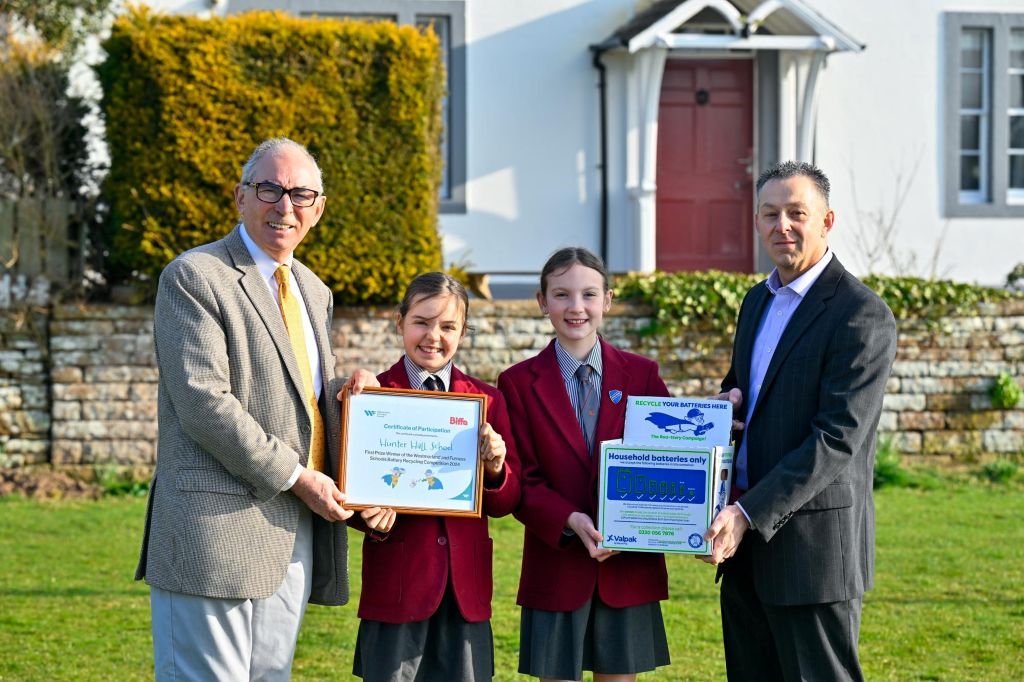
Cumbrian school children have helped save two tonnes of batteries from household waste.
Primary schools across the country have been rescuing batteries from their bins at home as part of the Baa-ttery campaign so named because 3.2 million batteries are thrown away in Cumbria each year – the same weight as that of more than 3.50 Herdwick Sheep.
Improperly disposing of batteries in general waste or recycling bins can be hazardous.
If batteries are damaged during transportation or treatment, they can ignite or even explode, damaging equipment and putting waste and recycling workers at risk – which makes saving them from the bin extra important.
Six prizes were up for grabs for schools which collected the most batteries per pupil, including two £300 book tokens, two £200 book tokens and two £100 book tokens, donated by Cumberland Council and Westmorland & Furness Council.
Seventy per cent of schools in Cumbria took part and the top six winning schools collected over 200kg of batteries between them.
The winners are as follows:
Cumberland
- 1st Place – Waberthwaite C of E School, Millom
- 2nd Place – Bewcastle School, Carlisle
- 3rd Place – Lowca Community School, Whitehaven
Westmorland and Furness
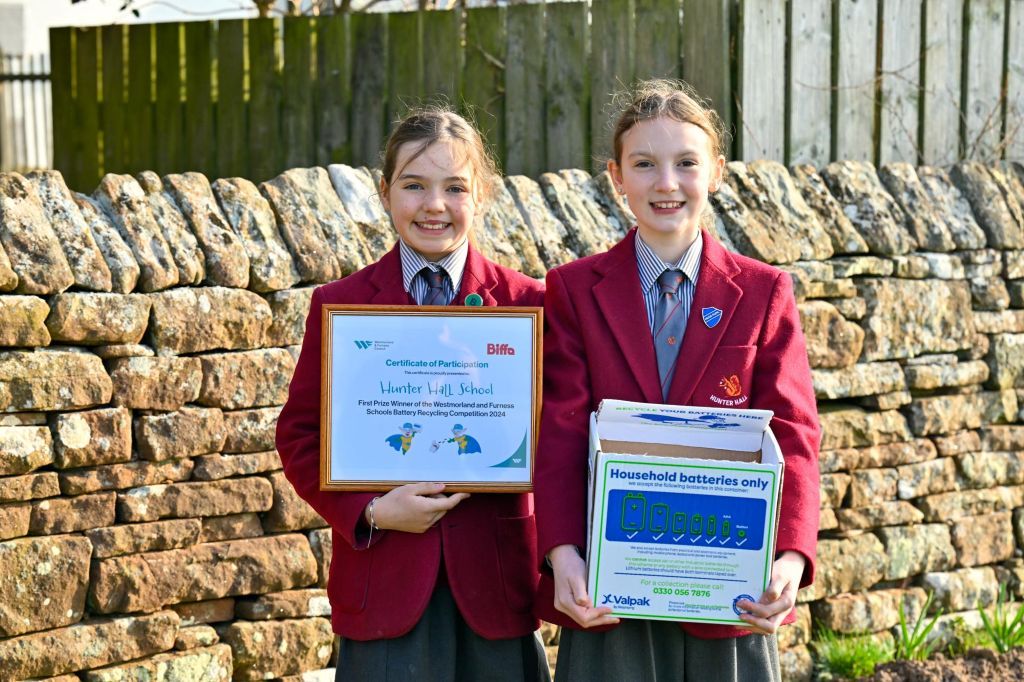
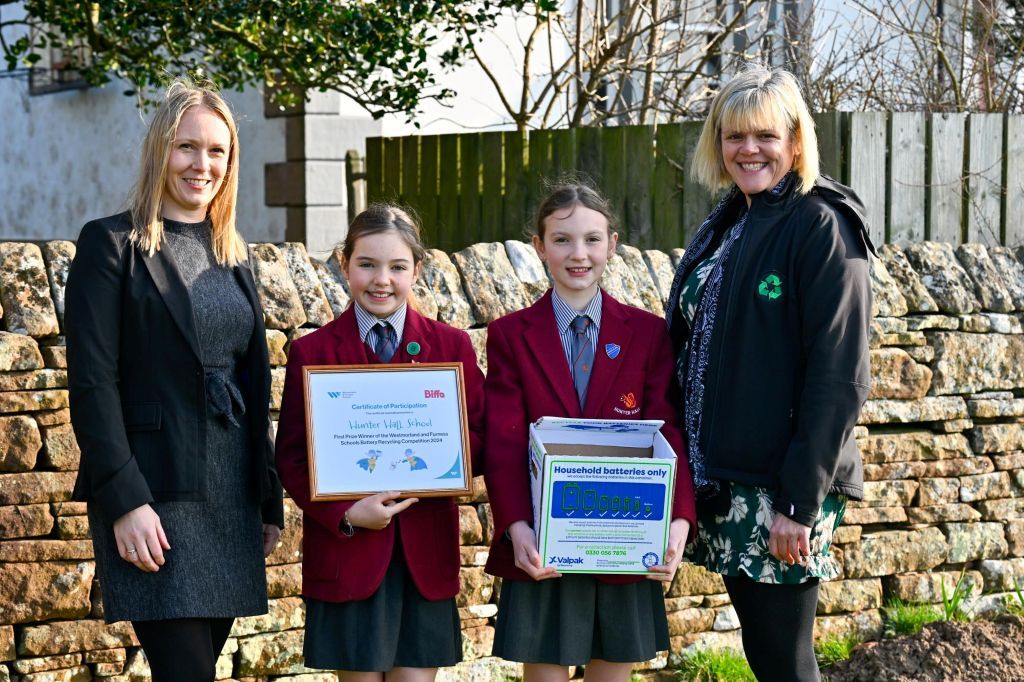
- 1st Place – Hunter Hall School, Penrith
- 2nd Place – Patterdale C of E School, Penrith
- 3rd Place – Penruddock Primary School, Penrith
The Baa-ttery campaign was launched by Renewi but is now managed by Biffa.
Free battery collection boxes were supplied to schools by campaign partners Valpak Ltd, making it easy for pupils to safely recycle their batteries.
Once a box is full, schools call the number on the box for a free collection and a replacement box.
Hayley Slack, communications education liaison officer at Biffa, said: “The Baa-ttery Campaign has been an enormous success. Every single person who has saved a battery from the bin has made a difference. It’s amazing to see how passionate everyone is about protecting our work force and the environment.
“The support from the start of this campaign has been amazing, not only have we highlighted the dangers of putting batteries in the wrong place we have also raised the profile of our two Mechanical Biological Treatment (MBT) sites in Cumbria.”
Biffa, which operates two Mechanical Biological Treatment (MBT) facilities on behalf of Cumberland Council and Westmorland & Furness Council, processes over 110,000 tonnes of residual waste from 225,000 households across Cumbria each year.
By diverting waste from landfill, the company helps convert material into energy, however battery-related fires remain a constant threat.
Nick Blake, contract director at Biffa, said: “We’ve seen a troubling increase in fires at our MBT facilities due to batteries being disposed of in household bins.
“Lithium batteries, especially in disposable vapes, pose a particular danger, causing explosive reactions during the waste treatment process and putting our teams and facilities at risk.”
The Baa-ttery campaign has been widely recognised for its impact, earning several awards, including the ‘Most Innovative Waste Management Solution’ award at the UK Business Awards, ‘One to watch’ in the Global Good Awards under the ‘Campaign of the year award’.
Hayley Slack also received a Certificate of Achievement at Enviro 100 for her commitment to sustainability.
Councillor Giles Archibald, Westmorland and Furness Council Cabinet Member for Climate, Biodiversity and Environmental Services, added: “As a council, we are committed to reducing waste and protecting our environment.
“A staggering amount of batteries are thrown away each year and this battery recycling campaign encourages a simple yet powerful step everyone can take to help make a difference.
If you need any further information, please don’t hesitate to ask.
“From households to schools, we all have a role to play in keeping batteries out of our bins and waste treatment facilities.”
Councillor Denise Rollo, Cumberland Council portfolio holder for sustainable, resilient and connected places said: “In our increasingly digital world, electronic devices are indispensable.
“From smartphones to remote controls these devices play a vital role in our daily lives. However, they often contain batteries which have a limited lifespan and need proper disposal.
“Even if they don’t cause a fire, damaged batteries pose a significant risk to the environment and so need to be recycled separately.
“Recycling batteries is a simple yet effective way to protect the environment and conserve valuable resources.
“The participation of our young people in recycling batteries has helped to reduce our environmental impact and ensure a safer community for all residents of Cumberland.”
Plans are already in the works to expand the campaign and bring battery recycling to even more locations across Cumbria.
By shining a spotlight on the importance of battery recycling, Biffa aims to increase the number of recycling points across the region and make it easier for everyone to recycle their household batteries, ultimately reducing the environmental impact of battery waste.
Residents and organisations can continue supporting the Baa-ttery campaign by ordering free collection boxes and visiting www.recycle-more.co.uk