Innovative peatland restoration trials are taking place on a Cumbrian fell.
The trials are taking place on Dufton Fell, on the eastern side of the Eden Valley, and aim to explore more environmentally-friendly peatland restoration techniques which could help to reduce carbon emissions released into the atmosphere.
The North Pennines National Landscape team is leading the trials which will be monitored until August 2028.
It will test a range of alternative materials to see how they can contribute to the extensive peatland restoration in the North Pennines.
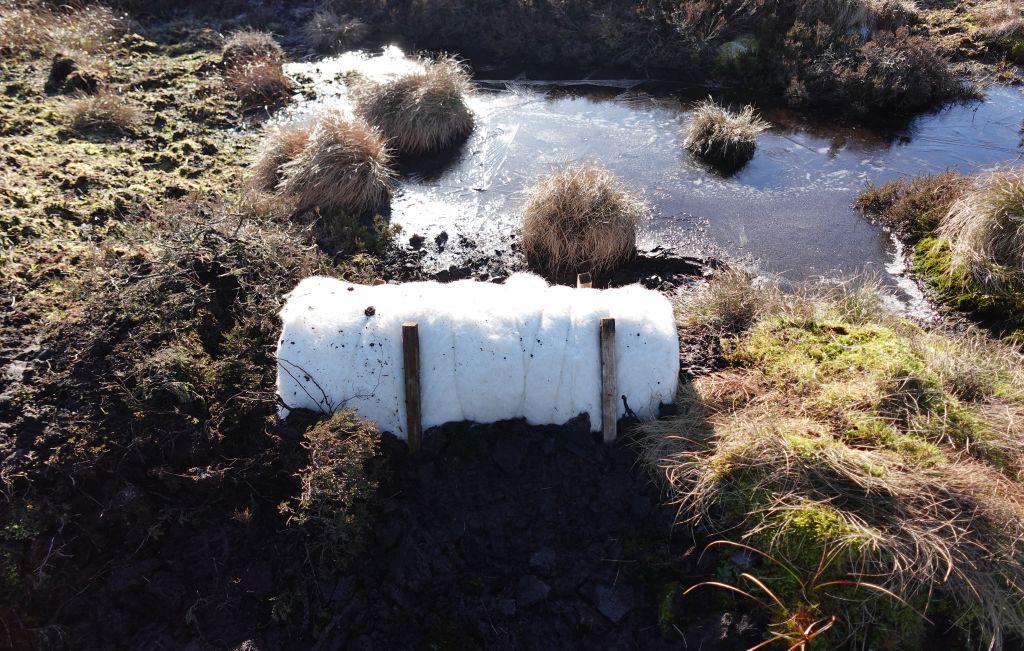
The materials that are being trialled are all biodegradable and consist of wool rolls, hemp bales and potato starch lattices.
The wool rolls and hemp bales will be used to slow the flow of water which is causing erosion and sediment movement, while the potato starch lattices will be used to help create vegetation in areas of bare peat.
Coir rolls are used by the team for peatland restoration but they are typically imported from Sri Lanka or India.
Wool rolls and hemp bales could be greener replacements. The wool rolls will be made from ‘Truewool’, produced by Wool Insulation Wales Limited.
Truewool is a 100 per cent British sheep wool product, which is usually used for building insulation.
The wool is netted together with more wool. In previous trials of hand-packed wool rolls, which were netted together with coir, the material degraded quickly but it is hoped that looking at three different densities of wool will determine the best method for the high, wet uplands of the North Pennines.
Hemp was chosen by the team because it is a strong natural fibre grown in the UK. The hemp bales for the trials are made by East Yorkshire Hemp.
The potato starch lattices have been used to restore a variety of ecosystems such as mussel beds, mangroves, riverbanks, and salt marshes.
The team decided to try them on areas of bare peat that are too steep to re-profile or revegetate with moss-rich plant material.
It can also be difficult for the team to source enough moss-rich material from the same site at which the restoration work is happening.
The lattices are interconnecting 3D structures made from potato starch, providing a stable place for vegetation to establish and slow down erosion. These structures will biodegrade in two to four years as the natural vegetation takes over.
The new restoration techniques will rewet and revegetate the peatland in the hopes that fewer carbon emissions will be released. It is also hoped the area will also have a greater diversity of wildlife.
Water supplies for reservoirs will be improved and the risk of wildfires will also be reduced.
It is also believed the risk of flooding will decrease because hemp bales and wool rolls directly slow surface runoff and the lattices indirectly slow surface runoff, by enabling revegetation.
Senior Field Officer, Alistair Lockett, from the North Pennines National Landscape team said: “It is important to try new methods to improve our restoration work.
“Potato starch lattices could help stabilise sediment, retain seeds and offer shelter for young plants to grow. Biodiversity will be enhanced because the hemp bales and wool rolls will form small pools of water, encouraging invertebrates, which in turn will encourage a rise in bird life.
“And the flooding risk is reduced, as the flow of water in upland catchments will be slowed. We look forward to seeing the results.”
Peatland Programme Manager, Paul Leadbitter said: “We have been restoring peatlands since 2006 and have been continuously developing. This is a great example of us exploring new ways of doing things.
“This innovation is a major step forward for peatland restoration and provides an opportunity to support the UK rural economy.”
Ruth-Marie from Wool Insulation Wales Limited said: “We are absolutely delighted that Truewool is being used in this peatland project. We have high hopes that our local British wool will be able to contribute to the preservation and restoration of these incredible landscapes.”
The restoration materials were airlifted and installed on the restoration site in early 2025.
The team will monitor the restoration work to establish how successful the interventions have been and annual reports will be produced to show the results and key findings.
Positive outcomes would mean the use of these restoration techniques on a much larger scale in the North Pennines by replacing or supporting current interventions.
The trials are being supported by funding from Defra’s Farming in Protected Landscapes programme.