
Rare 16th century wall paintings have been discovered a former Tudor hunting lodge in Cumbria.
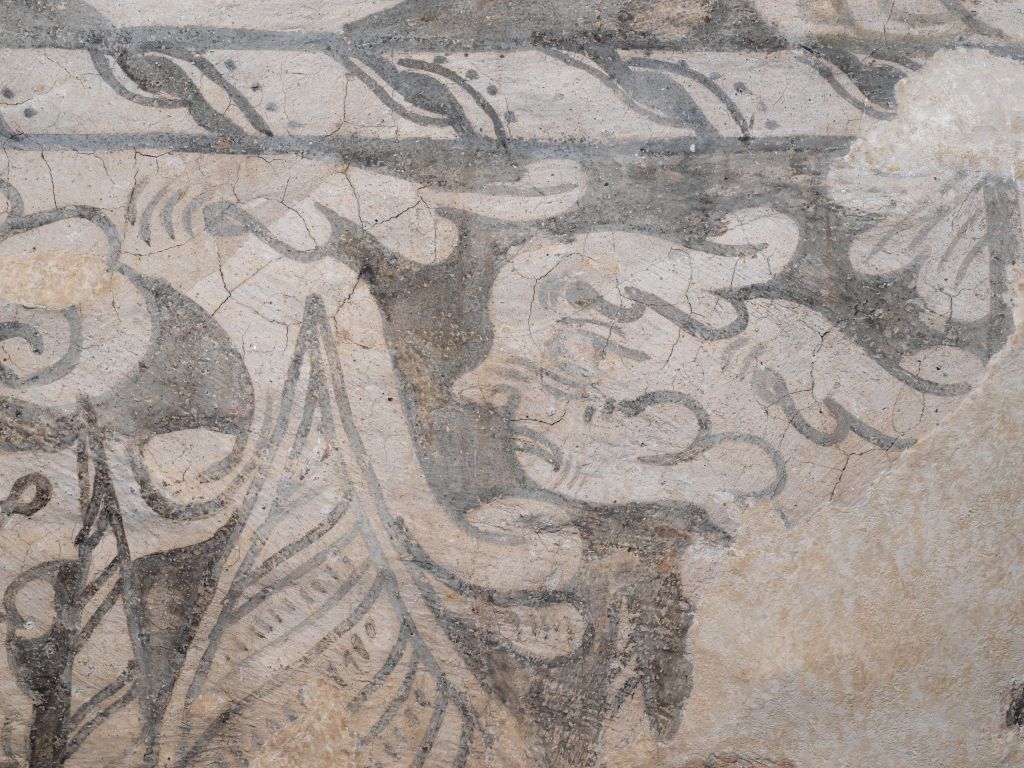
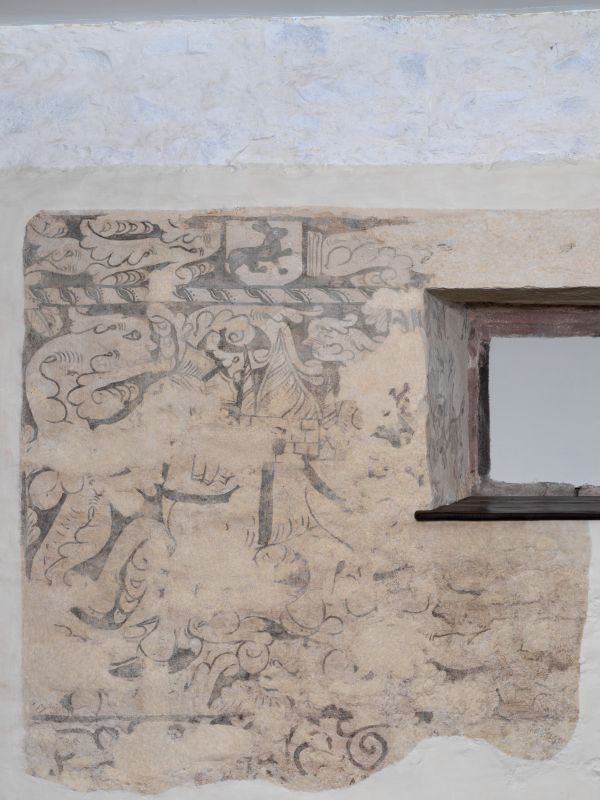
The murals were found at The Ashes in Inglewood Forest in Castle Sowerby and the Grotesque-style paintings feature fantastical beasts and foliage arranged in decorative panels.
Found on some of the lodge’s internal walls, evidence suggests the artwork originally covered a larger area within the rooms.
The first paintings were discovered on the first floor in the 1970s, while work some decades later in the 2010s and early 2020s exposed additional paintings in the hall on the ground floor as well as more artwork on the first floor.
Recent scientific dating of the building’s timbers, using dendrochronology – a technique that analyses tree growth rings to determine age – has provided new insights.
The results confirm that the roof over the earliest part of the house was built using timber felled in or around the winter of 1561/1562, during the early years of Elizabeth I’s reign. The
The Ashes, in Castle Sowerby, near Ivegill, is Grade II* listed and now its adjoining agricultural buildings and boundary walls have now been granted Grade II listed status.
This includes an L-shaped range of buildings constructed in local pink sandstone, featuring an earlier barn with a reused 16th century timber roof structure.
Heritage Minister Baroness Twycross said: “These remarkable 16th century wall paintings are a rare discovery for Cumbria.
“The exceptional artwork offers a glimpse into our Tudor past and I’m delighted that these paintings will be preserved for future generations to learn about our rich history and enjoy.”
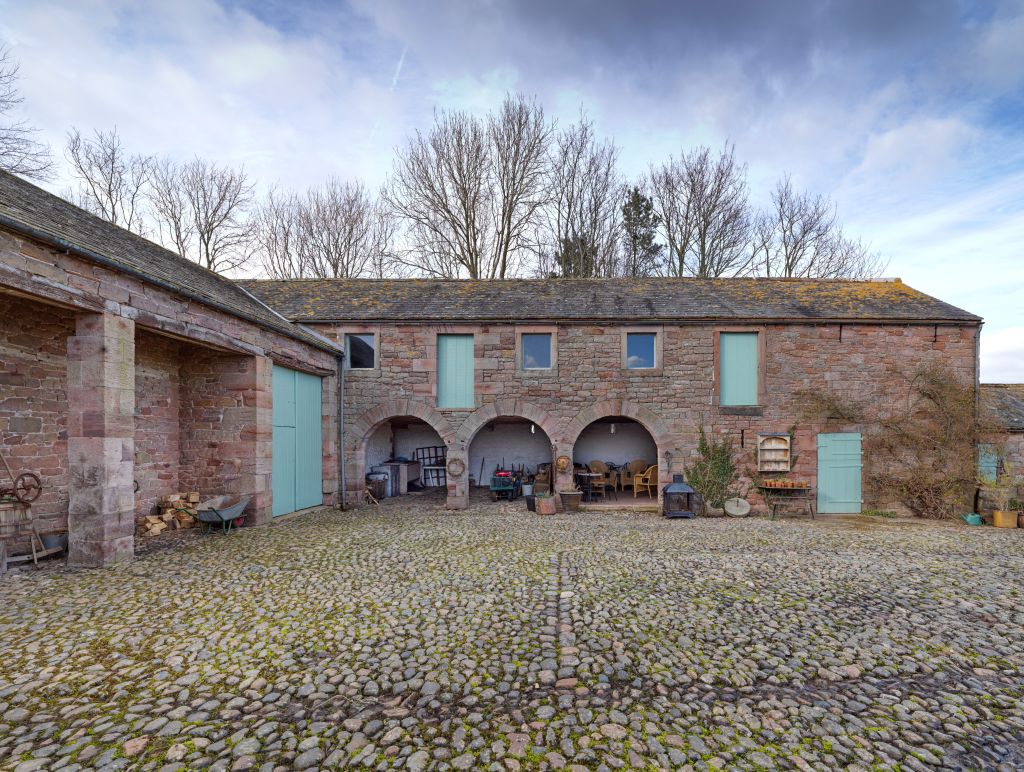
Historic England’s Myra Tolan-Smith said: “The combination of motifs discovered here is unusual even by national standards. Together with the newly listed farm buildings, this discovery provides remarkable insight into the evolution of a significant Tudor hunting lodge into a working farm.”
Jen and Richard Arkell, who own The Ashes, said: “A small fragment of wall painting – similar to that seen at nearby Dacre Hall – has been visible in the house since before we acquired the property over 20 years ago.
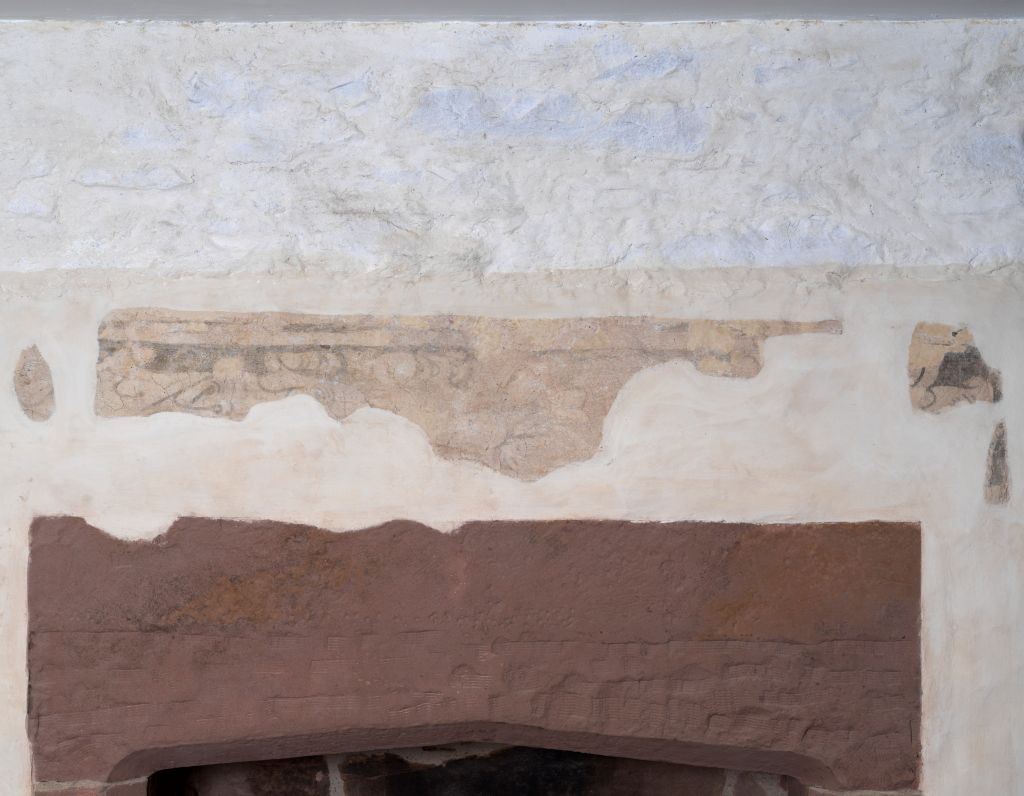
“However, recent work to the primary upstairs bedroom revealed much more of the composition. Removing old failing plaster to find these remarkable motifs and faces looking back at us is a moment we will never forget.
“The new protection given by DCMS on the advice of Historic England, is great news for The Ashes and will help secure the long-term conservation of the buildings and their setting.”