A milestone has been reached in the restoration of Cumbria’s Lowther Castle.
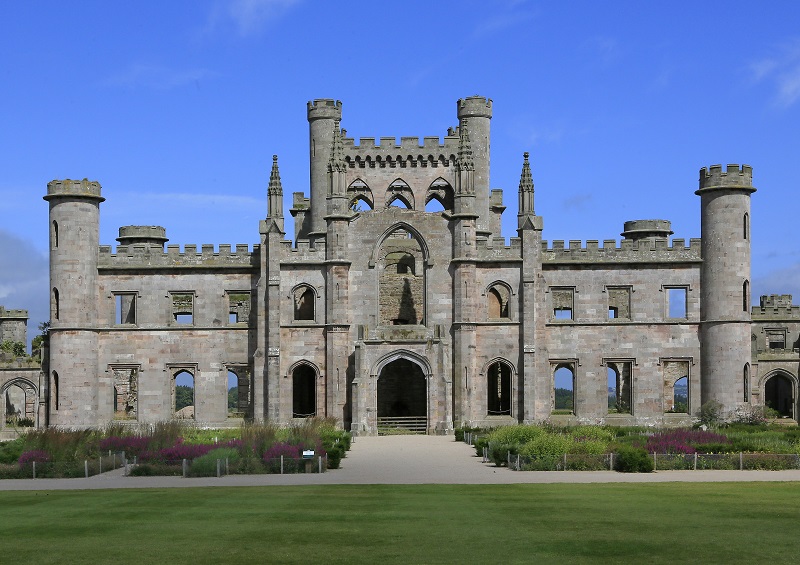
Built between 1806 and 1814, it was ordered to be demolished 150 years later.
Today, the ruined castle attracts around 250,000 visitors a year, and Jim Lowther embarked on a programme to give the building purpose.
The 21st century transformation of Lowther Castle from a collapsing ruin into a tourist destination has seen hundreds of stonemasons, thousands and of hours, millions of pounds, years of hard work and unwavering determination.
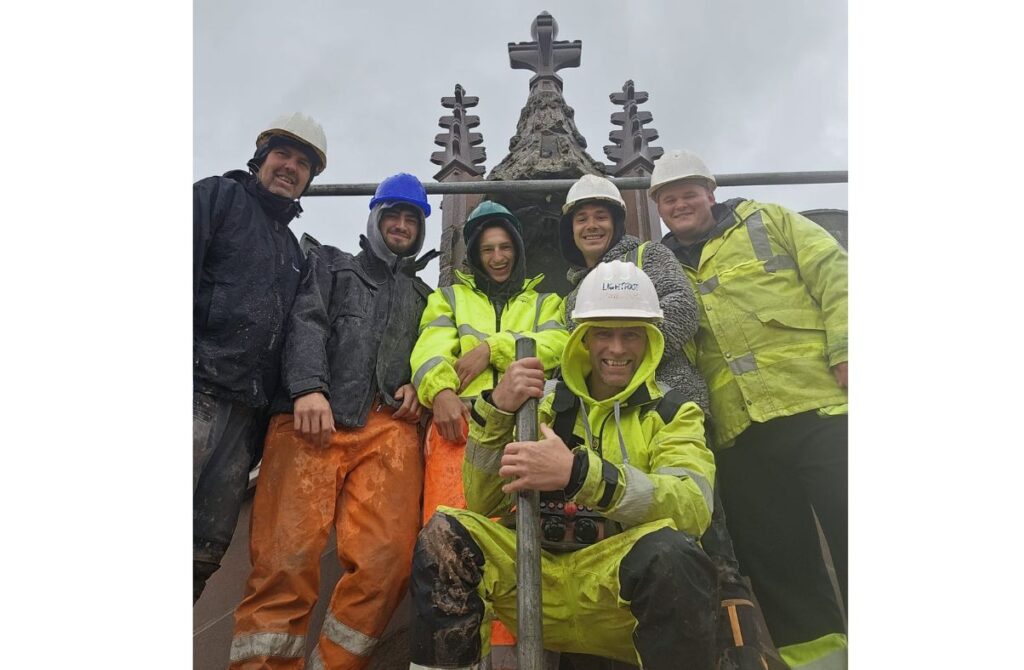
While the project is ongoing, it has reached a major milestone when the castle’s pinnacle, the south central gable that straddles the turrets presiding over the main entrance from the house into the gardens, was replaced.
It had collapsed in the early 2000s and was replaced by stonemason James Lightfoot, who runs Lightfoot Stonework with his brother Andrew.
The firm – a team of eight – has already been working on the castle’s restoration since 2023.
The pinnacle’s restoration was not on the agenda initially, but castle owner Jim Lowther asked James if it was possible.
Using photos and original plans, a way to reconstruct the pinnacle was decided upon and what material should be used.
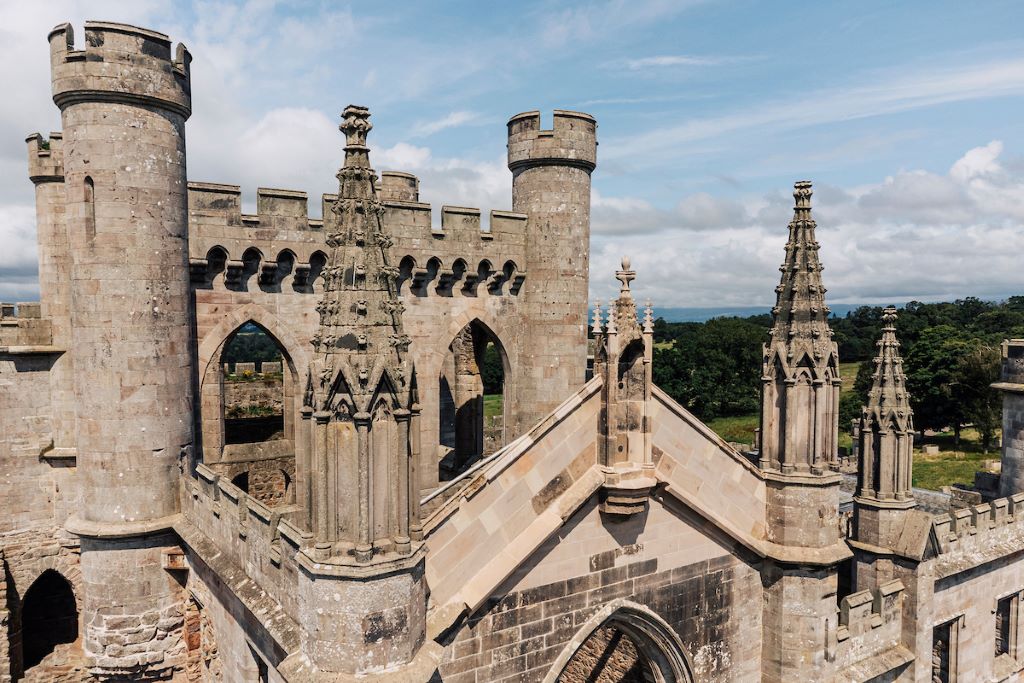
James said: “‘When the pinnacle collapsed, they must have just scooped up all the fallen masonry and dumped it within the western range.
“I came across this ornately carved stone sticking out of the mud and when we took a digger to the mound, we found it was that original central piece, more or less intact.”
Many other parts of the original pinnacle were also dug out and reused.
A huge steel frame, designed to ensure that the pinnacle would not topple a second time, had to be built, then lifted and lowered precisely into position.
Long stainless steel dowels had to be made and slabs of sandstone, sourced from a quarry in Derbyshire, had to be carved and faceted at Alan Hamilton’s Bowcar quarry at Stoneybeck.
An crane, with 18 tonnes of ballast had to be brought on to site to help rebuild the pinnacle.
James added: “We have nothing but respect for the original masons – who did not have anything like the equipment we can work with.
“In those days, it must have been all pulleys and winches and horsepower. Everything is nevertheless inch-perfect. Besides a couple of original chisels, we came across plenty of masons’ marks.
“One of these days, I will try and find out some of those men’s names.”
Jim said: “‘In 1999, the castle was placed on the Buildings at Risk Register by English Heritage, risk priority A.
“Since that initial listing, my principal ambition regarding the castle has been to have it removed from the register.
“The finishing of the pinnacle is a huge step in this direction.
“By the end of this year, we are hoping to have completed the repairs of the outer walls and fully recreated the magnificent silhouette of the castle.
“Then we can start on creating a new building to take its place within the walls of the old.”