Work has started to create a £2.64m community space linking people to nature on Walney.
The Earnse Hub is aimed at connecting local communities to open spaces, nature and education.
Groundworks and landscaping are being carried out by West Cumbrian contractor Thomas Armstrong (Construction) Ltd, with Enevate Homes Limited delivering modular buildings to create the community cafe, activity space and campsite support building and changing block.
Funded from the Brilliant Barrow Town Deal, it is expected that the Earnse Hub will be completed early next year.
Built on land owned by Westmorland and Furness Council, it will offer people the chance to experience and enjoy the unique natural environment of Earnse Bay, one of the most nature-rich and beautiful coastal locations in the country.
It forms part of the Brilliant Barrow initiative – a series of innovative projects funded by £25 million from the Government’s Towns Fund designed to help the town and its communities to thrive into the future.
The 3.37-hectare site will see the creation of a space focused on outdoor activities, free to access trails and an opportunity to camp overnight in a purpose built and sensitively-sited area.
Planning permission for the original scheme, which includes an Environmental Education Centre in partnership with Natural England, was granted in early 2023.
The project has now been revisited and refreshed the scheme to better reflect feedback received from the community.
Residents and schoolchildren were previously involved in helping to shape the vision for the site, with extra drop-in sessions held last summer.
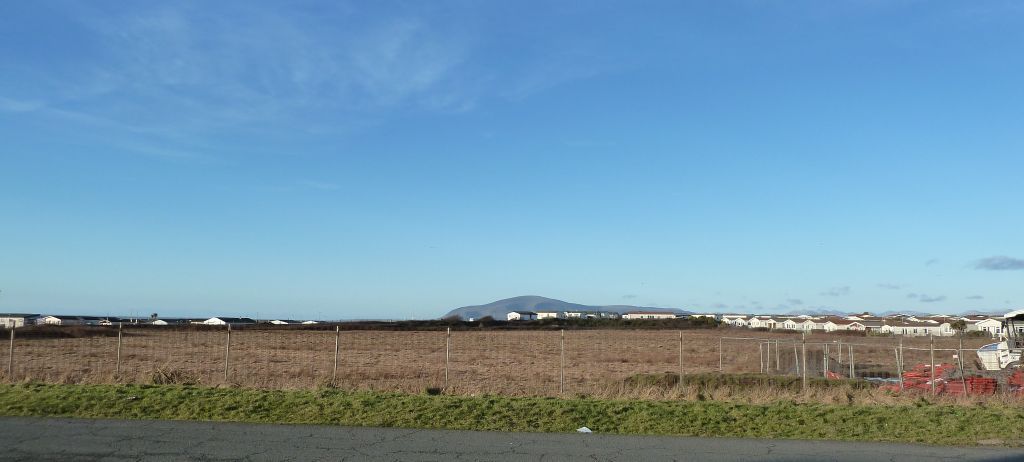
The site, which consists of grassland and scrub, with a redundant changing room building and some hardstanding, will be transformed to host a community café building with supporting functions such as a local shop, flexible spaces and toilet facilities for the park, and a camping support building serving the family and group camping area, which will be delivered by Westmorland and Furness Council.
The open space will be wild, with the central meadow retained for unplanned activities.
Grasses, herbs and mowing tolerant wildflowers will be introduced, while mown grass paths will crisscross the meadow to connect routes around the site, in and out of wildflower meadows, through willow arches, and scrub and trees. The main paths will be fully accessible.
A beach school, which will be delivered as a second phase to the development, is funded via Defra capital funding and will be led by Natural England.
The centre will provide a workshop, classrooms, and meeting space whilst serving as a volunteer and operational hub for the Natural England team based at North Walney National Nature Reserve.
To support that work, Natural England has worked with the council, Cumbria Wildlife Trust and Art Gene on a two-year development project, The Earnse Project, supported by National Lottery Heritage Fund. A further funding application for a delivery phase will be made later in the year.
The Earnse Project is co-curating activities with communities to encourage and enable more people to connect with nature, including an education programme, a wide range of volunteering opportunities, engagement with the arts, wellbeing programmes and the creation of more pollinator-rich green spaces across Barrow.
The community campsite will be separated from the park and supported from a camping barn, with WC, shower and kitchen facilities.
Simple camping pods and family tents will be available to rent, and some areas for parking small camper vans.
There will also be a community garden, surrounded by hedges, for vegetable growing and orchard activities, with scope for further community-led development. Quiet, wilder spaces have been introduced in the north eastern part of the site, close to the residential properties of West Shore Park.
The margins between West Shore Park residential properties and the park areas have been set aside as wildflower meadows or scrub planting on landscaped mounds, in order to act as a buffer between park activities and quiet residential areas.
Overall planting has been chosen to enhance biodiversity on the site, by providing new hedgerow habitats, and more mixed scrub and grasslands well suited to attract and support house sparrow, common lizard and other species.