Cumbria’s only standalone independent school is making radical changes amid rising pressures on private schools.
Hunter Hall School, in Penrith, for children aged three to 11, is overhauling its approach to education in response to a turbulent 12 months in the sector.
The school, alongside others across the country, has faced the introduction of 20 per cent VAT on school fees, business rate charitable relief being taken away, and the rise in national insurance employer contributions, alongside overall rising costs and energy bills.
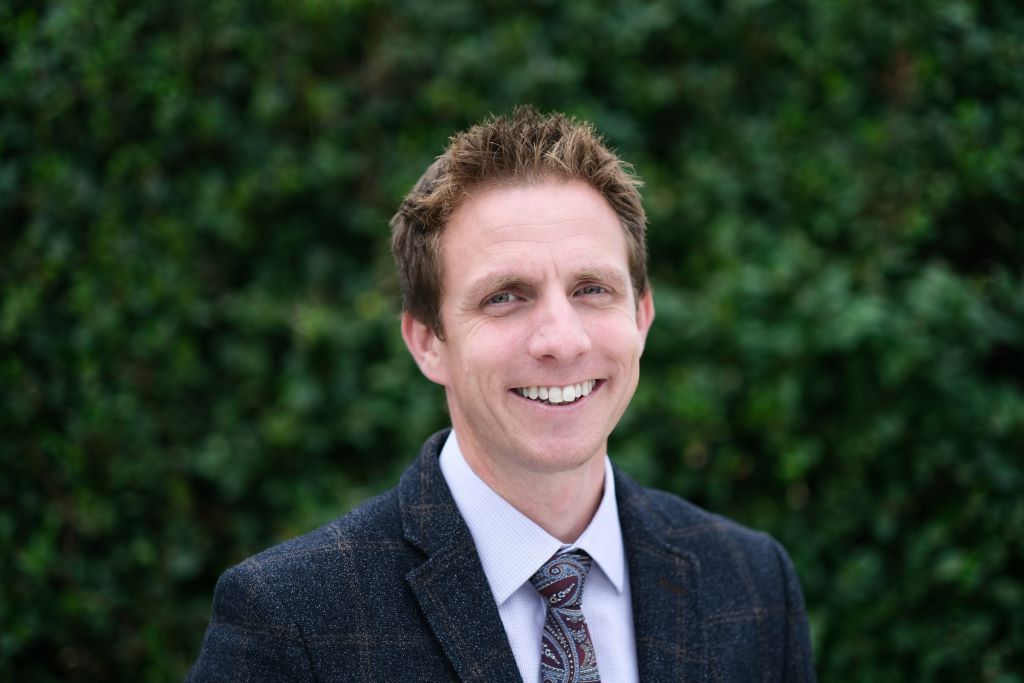
But headteacher Paul Borrows said the school was striving to see opportunity in the adversity.
He added: “It’s very much so been felt across the country, most people would describe it as one of the most challenging periods independent schools have faced and worse than Covid, in terms of what schools have had to deal with.
“It’s a combination of VAT on school fees and the business rate relief being taken away and the National Insurance increases, just all piled on top of each other very quickly to make times a lot more challenging than it has been.
“We’re a small school and we’ve never operated with much in terms of a surplus, when money has been available, it’s always been invested back into the school, rather than being squirrelled away, so it has been challenging.”
Paul said that while larger schools had been able to absorb the 20 per cent VAT on fees, many others, including Hunter Hall, have had to pass the costs onto parents.
He added that the increase in fees has resulted in the value of private school educational provision being scrutinised more than ever before.
In response to the pressures, the school has made radical changes to its approach to education, including:
- Lengthening its school day from 3.15pm until 4.20pm
- Removing homework and only later introducing maths and English homework for Year 6, to prepare children for secondary school
- Introducing mixed age learning
- Adding enrichment afternoons for upper school children who can choose from creative writing, horticulture, programming, Latin or philosophy
- Adding engineering to the timetable for upper school pupils
- A focus on developing critical and creative thinking skills at an early age
- Child-centred and exploratory learning where children make their own choices under academic supervision
- More after-school provision for lower school children, including an engineering club and a board game club to tackle excessive screentime
- New frameworks to track pupil development in critical and creative thinking, collaborative learning and metacognitive skills
Paul said that the changes had been made as part of a future-facing strategy to help children prepare for the fast-paced modern world and meet the demands of future employers.
He added: “We knew we didn’t have the capacity to absorb the VAT like some of the other larger schools did, but we thought actually, we can offer more and there are other ways we can add value.
“By extending the school day alone by over an hour, we’ve added eight weeks of extra learning in a year and with that, we didn’t want to send children home when the upper school day ends and expect them to then do homework.
“A big part of it was recognising the value in family time and that it’s important for children to enjoy that time. We only expect our parents to read with their children in their spare time now.
“So rather than busy parents coming home and asking if they’ve got science or maths homework and figuring out what to start on, there’s no ambiguities or extra pressure on parents.”
Paul added that parents had overall been supportive of the changes taking place at the school.
He said: “Largely our parents have been incredibly supportive. Hunter Hall is a proper little community school and very much so a partnership between the school and parents.
“Our parents don’t just financially invest in the school, they’re very much invested personally and on a family level.
“So it is a case of making sure what you’re doing offers value for them and I think a lot of parents and people don’t have huge confidence in the economic system at the moment.
“That kind of nervousness then feeds into everything and a lot of our parents are making a conscious choice that they want to spend their money here rather than something else. But our parents do rally around when things get tough and that has been quite nice to see.
“But parents should be questioning what their schools are doing and schools should be thinking about what they’re doing and how they offer value, and obviously the VAT has heightened that.”
Paul said that while the overall situation was frustrating, he believed looking forward is more important than dwelling on the challenges the sector is facing.
He said: “From my point of view, it is a direct offensive on independent education. We’re not for profit and the majority of independent schools are not for profit or charities but then you have many nurseries that are run as profit making enterprises.
“But nobody would suggest a VAT on nursery fees as it would be upsetting and it’s also not suggested with university fees, but you are taxing a subset of education.
“The other thing that also gets lost in the narrative is it was always a tax on parents, and never a tax on schools.
“I think it’s convenient to reframe it as a tax on schools, when your focus is on the big seemingly elitist institutions, but it’s people who have paid tax once on earnings and are now being taxed a second time.
“So I think a lot of people would express frustration with it and also with the speed of which it was introduced and the point it was introduced in January rather than in September to give schools time to make changes if they needed to.
“But we just have to work with the situation how it is.”
Paul said that making radical changes to educational provision at the school was something that was also a big part of its 40-year history.
He said: “I think we would like to think we’re quite radical, the school was set up with the idea it needs to be a bit different and if you look at our history, there have always been radical elements, so what we’re doing in a way is building on that radical tradition.
“We were on this path already, but what happened last year sharpened our focus, it made us feel we need to be clear about what we’re doing for parents and interested parents.
“It’s seeing the opportunity in adversity too, when you’re confronted with adversity, you can dwell, stomp your feet and say this isn’t fair, or you can look at your situation and say okay, well how can we make the best of this.
“Above all else the children are our focus and priority, obviously we can’t ignore those pressures in the background, but you can’t let it dominate your thought process.
“The school has quite a long history of offering something to more than just the children here too.
“We do huge cross countries with around 600 children from local primary schools and last year we hosted a series of maths masterclasses and invited local schools to nominate Year 6’s with a strong interest in maths.
“We also had an orchestra day and invited local primary schools and they performed for parents, we’ve always been an outward facing school that involves the local community and that value we offer isn’t just limited to the parents and children here, it’s for the wider community too.”
Paul said that going forward, the school was planning to continue evolving its educational provision.
He said: “One advantage we have is we’re a small school, we employ 20 people and have fewer than 100 children, and that means we can be agile in the way we respond to things.
“There are things we have in the pipeline, so introducing engineering is a step towards a more integrated curriculum, as the traditional divide between subjects starts to fall a little.
“Under engineering comes things like maths, design, and art and we would like to explore how we do that in other areas of the curriculum as well.
“That’s the next part of our journey and we’ve got some time to spend embedding the changes we’ve made and being open to any adaptations that might need to take place.”