
The roads in Cumbria are appalling – FACT.
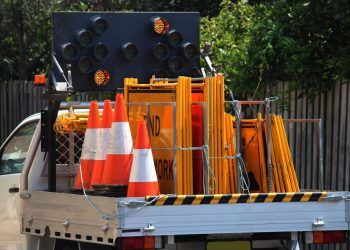
Doesn’t matter how much the councils are spending on them, until we have the money to repair them properly and not do some hole filling, then they will remain appalling.
A lot of people are left wondering what day to put out the pink striped bin and what we can and cannot put in it – FACT.
Nothing wrong with the crews who come around to empty them, councils have made a dog’s dinner of organising refuse and waste collection.
These are just two of the priorities that the good people of Cumbria have. Is changing, yet again, how we are governed really so important?
There are two concerns regarding the proposal to have a mayor for Cumbria. One is practical – who will end up doing what, while one is more academic – is this democracy?
So let’s float some thoughts.
On the practical front, local government has evolved and become less local.
Back in the mists of time, by way of example, Carlisle city and Barrow borough sorted out most things by themselves with local councillors, known in the communities, making decisions.
For the bigger issues – education and social services, we had Cumberland, Westmorland and Lancashire county councils.
Alongside these were urban district councils and rural district councils, and we knew who would be emptying the bins and who to shout at when potholes appeared in the road.
Then came April 1 1974 and all the above combined into a two-tier system with Cumbria taking on the big stuff with six ‘local’ authorities doing the more mundane but still important stuff.
We still knew our local councillors, and we still had parish councils although few people knew what they did!
Then, another major change – Cumbria was split in two. While the split might have replicated the Cumberland/Westmorland/Furness/Lancashire boundaries to some extent, it created some really crude anomalies such as Millom, closely associated with Barrow, being bundled under Carlisle and Alston, associated with north Cumbria, being bundled in under Barrow in Westmorland and Furness.
All the time, the decision making became even more remote from the local communities they served.
No longer were matters relating to Kendal (or Whitehaven, Keswick, Ulverston, etc) decided by the good folks of those towns, with decisions made many miles away by councillors from t’other end of the county.
Now the proposal is to have major powers invested in ONE person and the removal of governance from the local to the regional is complete.
And has anyone clearly explained what this mayor will be responsible for? Anyone who took time to read the Government’s consultation paper on establishing a Cumbria mayor might well have come away not really understanding what the difference is between a mayor making a decision and the mayor having a ‘strategic responsibility’ for policy.
But regardless of the boundaries between what the mayor will be ultimately responsible for and what they will devolve to the ‘local’ authorities, it does put another nail in the coffin of local people deciding on local matters.
And that brings us to the second issue, that of democracy.
The Government carried out a consultation earlier this year. Here are the responses from the public:
- Q1 58% disagree
- Q2 59% disagree
- Q3 56% disagree
- Q4 57% disagree
- Q5 61% disagree
- Q6 56% disagree
- Q7 63% disagree
Okay, there was a small response and, as usual with these things. Those motivated to respond will polarise into two camps – those in favour and those not.
But tellingly, these figures show those who disagreed. When you take into account these who were ‘neutral’ then the number agreeing was very much smaller.
So, did the public get to have a formal say? Of course not because the indications are that if we were asked, we would say no.
So, let’s leave it to a) the two councils to decide and if, by any miracle, they didn’t fall into line, then the Secretary of State would jump in and make it happen anyway.
It is far easier for the Government to control and manipulate how we are governed by having one person to manage rather than having a number of councillors or, heaven forbid, a Swiss-style of government where major decisions are put out to popular vote!
We don’t have a proper democracy in the UK, we have what is called a ‘representative democracy’ where decisions are made for us primarily by councillors, MPs and mayors who, almost exclusively, come from the established political parties who are locally managed locally behind closed doors by party apparatchiks who are, in turn, managed by central party offices.
Okay, we are promised £333m over 30 years (that’s just over £11m a year. Cumberland Council are spending £357m this year. It looks great, but really will be but a drop in Windermere.
So, do we really need a mayor or do we want the current system to be given more than a couple of years to actually deliver what we, the local taxpayers want delivered?
I know where my vote would go ……. If I was given a vote.
About Cumbria Cat
Born in Cumberland and, now, back living in Cumberland, having spent most of the past 50 years in some place called Cumbria, this cat has used up all nine lives as well as a few others.
Always happy to curl up on a friendly lap, the preference is for a local lap and not a lap that wants to descend on the county to change it into something it isn’t.
After all, you might think Cumbria/Cumberland/Westmorland is a land forged by nature – the glaciers, the rivers, breaking down the volcanic rocks or the sedimentary layers – but, in reality, the Cumbria we know today was forged by generations of local people, farmers, miners, quarriers, and foresters.
This cat is a local moggy, not a Burmese, Ocicat or Persian, and although I have been around the block a few times, whenever I jump, I end up on my feet back in my home county.
I am passionate about the area, its people, past, present and future, and those who come to admire what we hold dear, be it lakes and mountains, wild sea shores, vibrant communities or the history as rich and diverse as anywhere in the world.