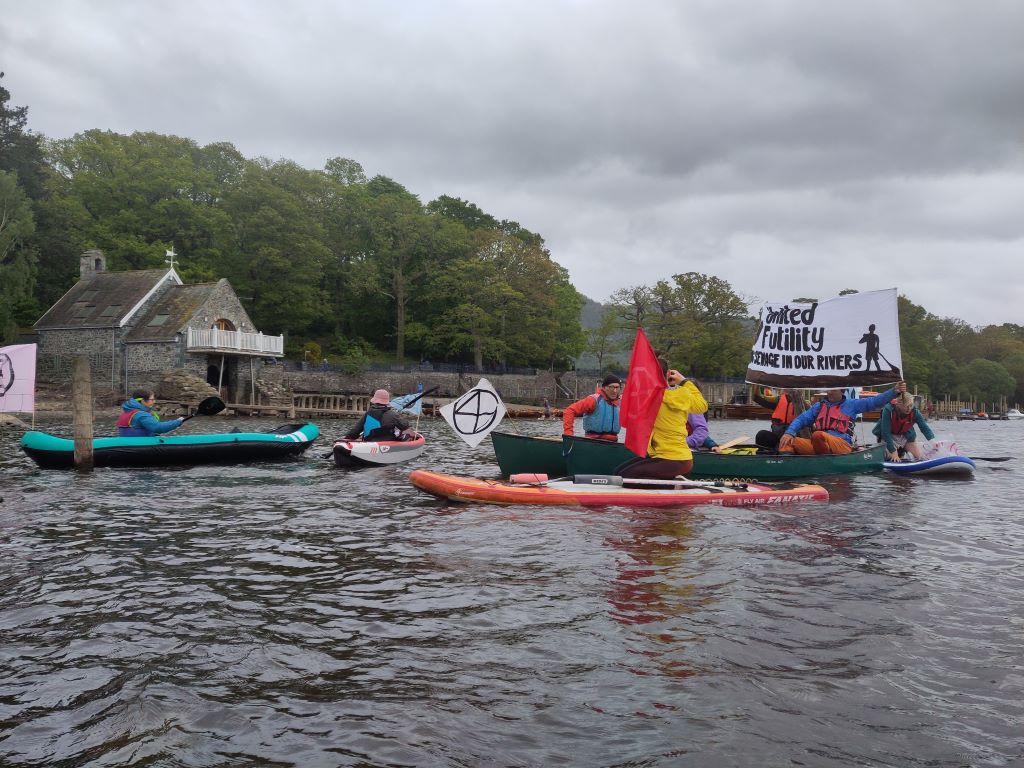
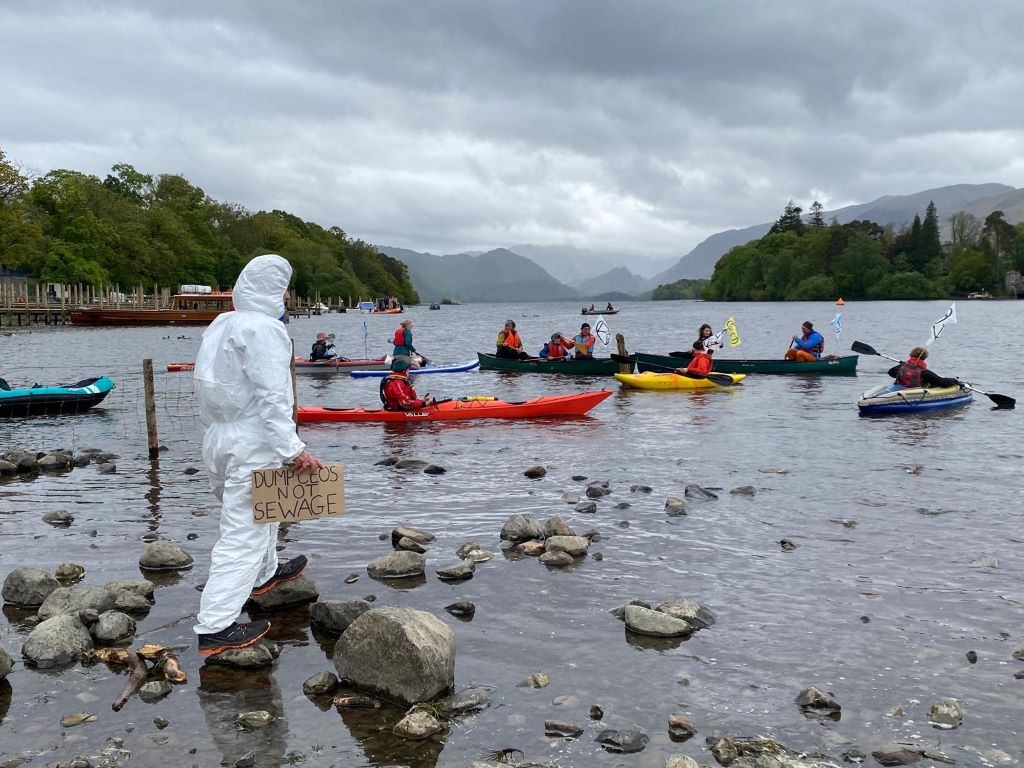
A group of Cumbrians took to the water in kayaks, canoes and paddleboards on Derwentwater to highlight sewage problems.
The group aimed to bring attention to the sewage outflows into the River Derwent, and hold water company United Utilities to account.
The bathing water profile for Derwentwater in Keswick was classified as poor in 2024 and 2025.
Bacteria such as e-coli are present and are at high levels in June and September.
The Environment Agency has advised against bathing.
The Keswick paddlers were joined by thousands of people taking part in local events across the UK in a series of Paddle-Out Protests organised by Surfers Against Sewage.
In 2025 United Utilities had 113 sewage spills from storm overflows at treatment sites that feed into Derwentwater, spilling for 759 hours.
Latest figures show:
- Grange Bridge had 53 spills for 465.15 hours into River Derwent
- Rosthwaite had 21 spills for 46.62 hours into a tributary of the River Derwent
- Stonethwaite had 39 spills for 247.27 hours into Stonethwaite Beck
Bel Lloyd, of XR Cumbria, said: “Water is the lifeblood of our planet. Without clean water, life as we know it will end. Treating our lakes and rivers as sewers is harming wildlife and ecosystems. We must act to stop putting Earth’s water at risk.”
A United Utilities spokesman said: “We don’t have any assets that discharge into Derwentwater. Our closest assets are 5km away and don’t impact bathing water quality in the lake.
“We understand people’s concerns around storm overflows. In 2025 we saw a 21% reduction in spill duration across Cumbria, with the number of spills from storm overflows falling by 14%.
“We know there is more to be done and that’s why we’re working at pace to deliver the biggest upgrade of the wastewater network for a century, cutting the number of times overflows operate and transforming over 500km of waterways across the region – including an upcoming upgrade at Keswick Wastewater Treatment Works.”