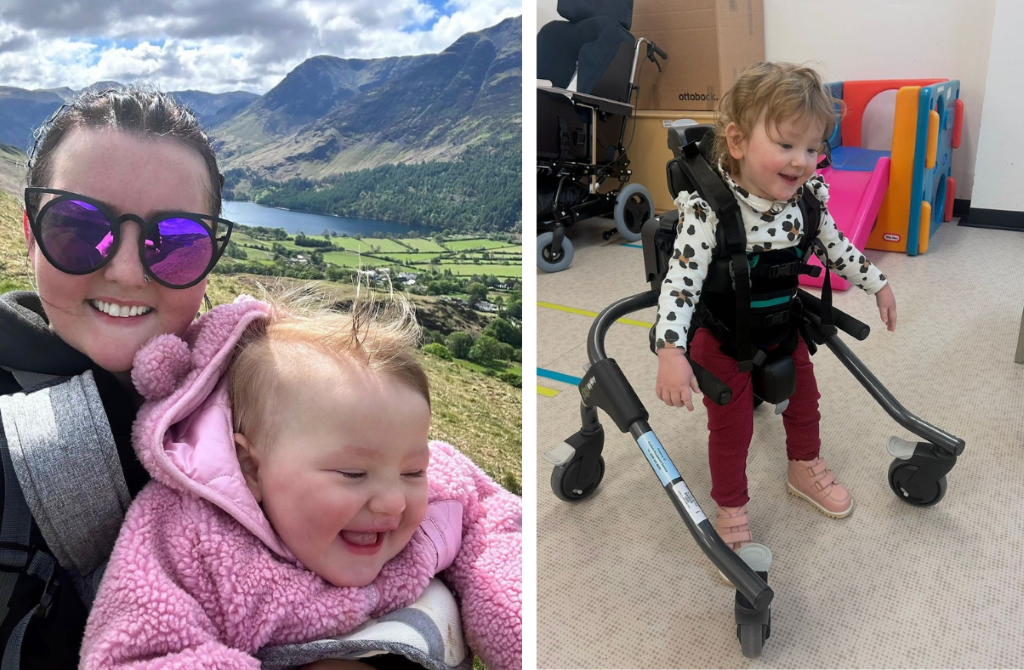
A Cumbrian mum has launched a campaign to give disabled people a stronger voice in Cumbria.
Zoe Mason, 30, of Kendal, has launched Izzy’s Way – a campaign inspired by and named after her two-year-old daughter, who lives with cerebral palsy.
It aims to push for real change and improve awareness, understanding and inclusion for disabled people across the county by listening to and amplifying their lived experiences.
The campaign has been inspired by the family’s own experiences of disability, including the barriers, exclusion, and quiet discrimination that many disabled people and their families encounter in everyday life.
Zoe previously worked as a nurse educator at the University of Cumbria. She added that her background had given her the spark and knowledge to set up the campaign and help others in the community.
She is funding the campaign through her business Artibelle Florist which she set up when Izzy was born to allow her more flexibility to take care of her.
She said: “We started to experience times where people perhaps didn’t have an understanding of disability or we had some hardships or we just felt we were fighting for the very basic needs of Izzy within the community.
“I have peer support groups that I attend and Izzy also goes to things like hydrotherapy and talking to other families and individuals with disability, there was a conversation about ‘well this is what you have to get used to.’
“That made me really sad and it really made me think when Izzy grows up, is this what she’s going to have to endure?
“Will it be a constant battle to have a voice in the community and having constant discussions about why she needs accessibility and why she needs extra support?
“That’s what the project was inspired by and it’s really about giving those within the community with disability a voice to be able to say this is why we need those measures in place to make our lives more welcoming and accessible and a better quality of life overall.”
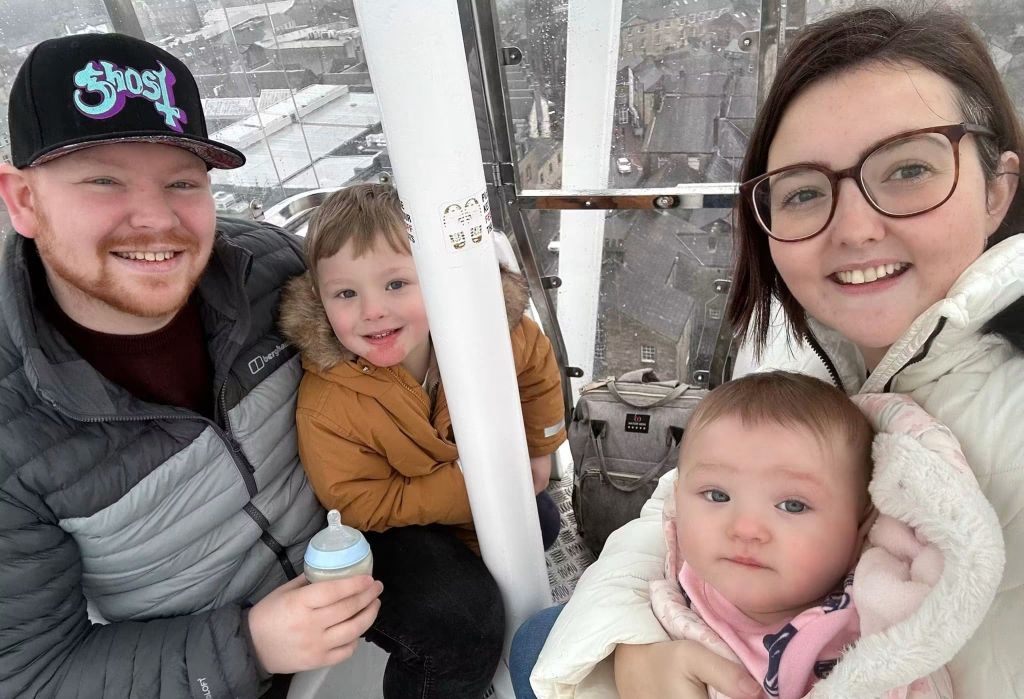
The first phase of the campaign is an anonymous community survey for disabled people, carers, and family members.
The survey’s results will be used to identify the challenges people are facing as well as any examples of good practice to create evidence that can be used to implement real changes in organisations and services across the county.
You can take the survey here: www.artibelleflorist.com/about-4.
Zoe said: “The survey asks questions around the challenges you face in the community but also the good practices you see.
“The idea behind it is to gather everybody’s voice into one piece of evidence that can then be presented to MPs or organisations to say these are the common barriers that people are facing and how are we going to improve them.
“Phase two is then about creating opportunities for better inclusivity within the community and to bring in Izzy’s Way champions who push forward with the recommendations we get from the survey in their organisations and services.
“I’m also hoping we’ll start challenging policies that create those barriers and that will be through conversations with MPs like Tim Farron and the local councils.
“Phase three is then about keeping that implementation and the legacy of Izzy’s Way. I’m hoping we can support organisations to continue with those recommendations and continue listening to the voices of people with disabilities.
“In the long term I would really like to push it nationally and say this is what has worked in our area and within Cumbria and then take it forward to parliament and say we need to implement these things more widely in society.”
Zoe said that the campaign has a specific focus on targeting quiet discrimination – which is without direct hostility and can be subtle, indirect and often go unnoticed.
It can appear through exclusion, resistance to reasonable adjustments, low expectations, or disabled people being made to feel like an inconvenience just for needing equal access and support.
She added: “It’s those subtle nuances within conversations or policies where people with disabilities are either dismissed or not understood or heard.
“It can be really simple things like if someone applies for accessibility within a housing environment or in their own home and you then have people who oppose that, it creates another barrier where they have to fight for that accessibility.
“That’s a really good example where it’s not deliberately said ‘it’s due to your disability that we’re going to oppose it’ but it creates an extra barrier.
“It can also happen with children in schools where there might be specific rules in place that actually create difficulty around their disability and the school may not be willing to look at that from the perspective of the person with the disability.”
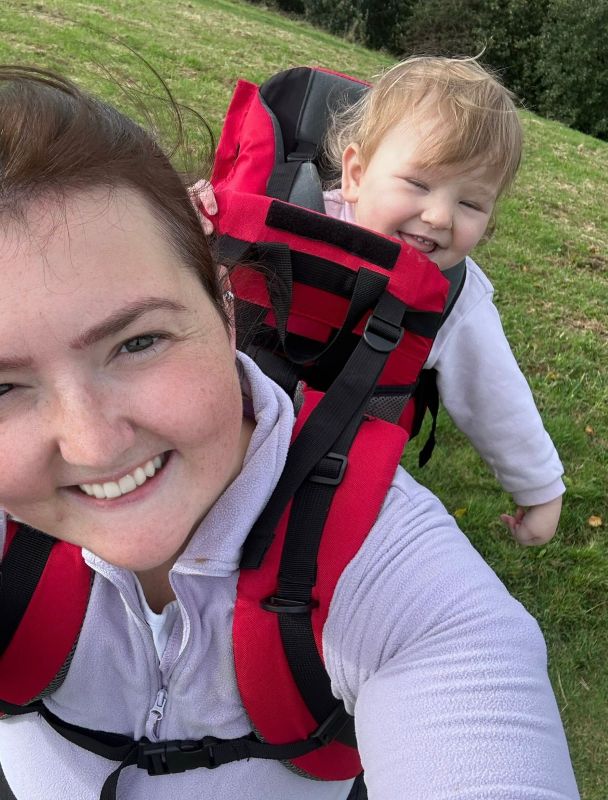
Zoe added that quiet discrimination can also be caused by rigidity in rules, regulations and attitudes.
She said: “I’ve had conversations with parents where if they’ve got a type of equipment for their child and they’re in a public place or getting public transport, they’ve been asked to move or take down that equipment.
“Even when they express that actually, it’s a medical device, it’s not a pushchair or pram, they’re still told that due to rules they have to take it down.
“That then means that their child can’t travel or be in that environment. It’s those subtle areas where disability is not considered and within the Equality Act it’s really difficult to prove quiet discrimination because it’s not blatant.
“Another example for me is I’m type one diabetic and I’ve experienced a lot of situations where I’ve been in public places and I’ve been told not to inject my insulin.
“So that’s another example of where quiet discrimination happens because people don’t want to experience me giving insulin, but it’s essential to my life.”
Zoe added that she wants Izzy’s Way to be a vehicle for practical change that encourages earlier support to prevent quiet discrimination.
She said: “I had an interesting conversation with Tim Farron, who has been very supportive of the campaign and I said very often, people will turn away because it doesn’t affect them.
“Tim’s response, which I wholeheartedly agree with, was yes, but ignorance is not an excuse.
“And we’ve really experienced it, even within our home we’ve had situations where we’ve felt potentially unwelcomed or that because Izzy has a disability that she’s a burden.
“But on the other end of that we’ve had neighbours who have been wonderfully supportive.
“Me and my husband James have had many conversations about how exhausting it is being an advocate and having to re-explain things.
“When people just think ‘I don’t understand it, I don’t want to include you or have a conversation with you and I’m worried about how you’re going to react’ you then have to use your energy to argue for basic needs.
“But we have always said we’d rather people ask questions instead of experiencing that quiet discrimination.
“We love it when people come up and ask about Izzy’s wheelchair or ask if we can explain about cerebral palsy.
“You will find that people with disabilities are often happy to explain, because it means people are taking notice and are curious rather than exclusive.”
The survey will close on September 1 and Zoe said she has so far been blown away by the response to it.
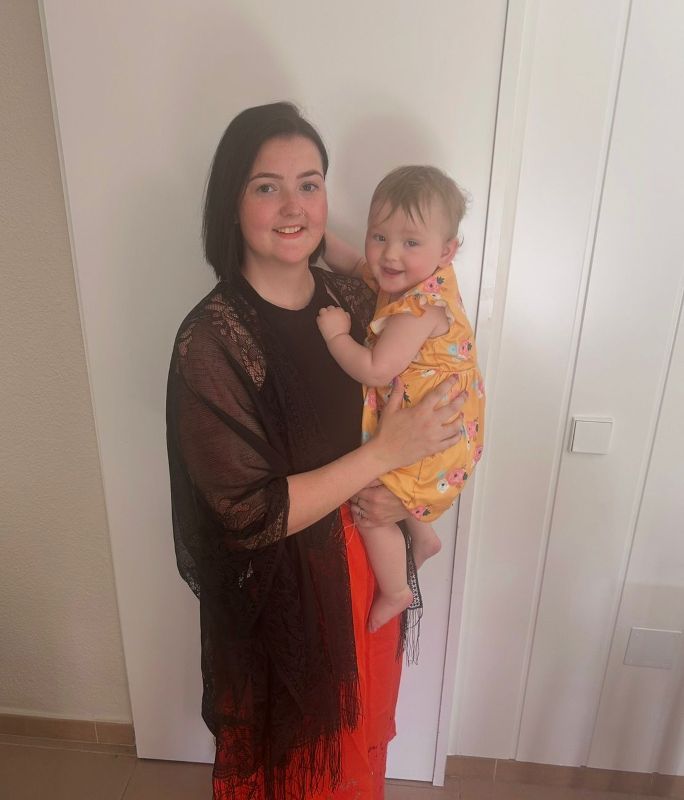
She added: “We’ve so far had a really overwhelmingly positive response which is lovely.
“I’ve been really humbled by the sheer amount of people that have shared their story already. It has been a really positive experience.
“People have been able to share and highlight things they’ve found difficult, but also the good examples and positives they’ve experienced.
“The survey is anonymous but there’s also an opportunity within the survey for people to become part of Izzy’s Way.
“So people can come and talk about their story to me and those stories will be used as case studies in the report of the survey and taken to Tim and the local council.
“If anyone has ever felt unheard, I would like this to be their opportunity to be heard.”
Zoe said while the campaign is focused on driving change, it is also about seeking out positive examples of support in communities.
She added: “It is difficult, I’ve had lots of conversations with other individuals and you feel as though you meet the best of society with people who want to jump in and help you.
“But then you also meet the worst with the people who want to make things more difficult for you and create those barriers.
“I’m hoping that Izzy’s Way gets rid of those extremes and we can meet in the middle and move forward.
“But when I did my floristry I trained at Tallulah Rose Flower School at Levens Hall and Rachel my tutor has been phenomenal in her support and I really could not have done it without her.
“When I left nursing to go into floristry every step of the way Rachel has championed us and supported us and has been fantastic.
“But Izzy goes to Castle Park School and they were one of the only schools that would accept her due to her disabilities. From the start their attitude has been we will work with you to problem solve anything that comes up.
“They’ve just taken Izzy under their wing and ran with her and it’s her favourite time of the week, she adores being in preschool.
“But the reason I’ve named the campaign Izzy’s Way is it’s the idea that as Izzy grows up, Izzy’s Way will create a world that is more inclusive for her, she feels more welcomed and there is less barriers that she has to battle.
“She’s the cheekiest, funniest little girl and she’s got such spark in her and the idea that this campaign will help the world accept that spark even more than it does now, does make me emotional.”