[H]istoric England’s Heritage at Risk Register for the North West is published today (26th October), giving an annual snapshot of the condition of some of the region’s most important historic buildings, sites, monuments and places.
Across the North West, 30 sites have been removed from the Register because their futures have been secured, while 25 sites have been added to the Register because of concerns about their condition – the majority of these (17) are places of worship. Over the past year, Historic England has offered £1.08m in grants to help 15 of the region’s best loved and most important historic sites.
The Heritage at Risk Register 2017 reveals that in the North West, 89 Grade I and II* buildings, 114 scheduled monuments, 134 places of worship, 7 registered parks and gardens and 65 conservation areas are at risk of neglect, decay or inappropriate change. There are 409 assets on the North West Register, 14 fewer than in 2016.
Historic England has been busy over the past year supporting local authorities across the North West to improve conservation areas, and as a result more have been removed from the ‘at risk’ Register than added (5 vs 3). Conservation areas came into force 50 years ago and are an important tool that local authorities have in their armoury to protect historic buildings, streets and landscapes.
Charles Smith, Heritage at Risk Principal for Historic England in the North West said: “We’re delighted that 30 irreplaceable historic sites across the region have been saved this past year. Their rescue is important. Heritage promotes a sense of belonging and civic pride – and it can also be a huge driver for economic growth, stimulating regeneration and tourism. This year we have seen some wonderful places saved as result of fruitful partnership working with councils.
“On their 50th anniversary we are pleased to report that five conservation areas across the region have been protected – they have a vital role as we look to the future, and can help councils and communities to preserve what’s really special for future generations to enjoy. But sadly the continuing decline in the number of local authority conservation officers could start to put these designated historic parts of our region in jeopardy.”
Highlights from this year’s Register:
SITES ADDED
ADDED: Burton-in-Kendal Conservation Area, Cumbria
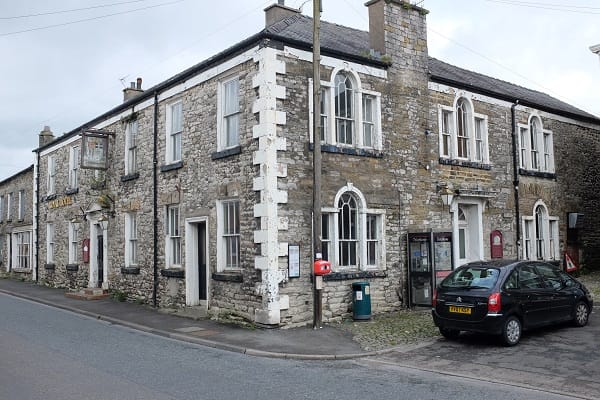
Burton-in-Kendal is one of South Lakeland’s most historic villages. It was once a busy place with markets, fairs, pubs and hotels, and a bustling hub located between Lancaster and Kendal. But the passage of time and traffic has taken its toll, and a number of the village’s buildings are lying empty – with some showing signs of decay and loss of historical detail. Historic England is going to work with South Lakeland District Council to address these early warning signs and to help kick-start its recovery.
ADDED: New Sedgwick Gun Powder Works, Cumbria
This scheduled monument has been the victim of flooding. The gunpowders manufactured here from 1857 until 1935 were used for mining, quarrying and other blasting activities. Today, many remains can be seen, including those of mills, a pump house, a saltpetre refinery, a boiler station, stables and a joiner’s shop, together with large parts of the water management system which powered the waterwheels and water turbines. Historic England is going to work with the National Trust to address the problems caused by the flooding and protect the site in the longer term.
ADDED: Fleetwood Town Centre Conservation Area, Lancashire
The coastal town of Fleetwood is a rare, purposefully planned settlement in the North West. In the 1830s, the principal landowner (also a local MP) hatched a plan to re-develop the town to make it a busy seaport. He commissioned the distinguished Victorian architect Decimus Burton to design a number of civic buildings, including two lighthouses. The town boomed in the first half of the 20th century with the growth of the UK fishing industry, but has fallen on hard times. Historic England is going to work with Wyre Council to help preserve its historic buildings and attract private investment.
ADDED: St Joseph’s Catholic Church, Lancaster, Lancashire
This Gothic Church was designed by Pugin & Pugin, of London, and built in 1900 in the historic city of Lancaster. Its construction was largely financed by the Coulston Family who played an important part in the development of Catholic Churches in the Lancaster area. They were originally yeoman farmers from Roeburndale in North Lancashire, and their 19th century wealth came from tanning, land acquisition, banking and railway shares. The church, which overlooks the River Lune, was constructed in sandstone and slate. Unfortunately, this fine building is no longer watertight and is in need of significant repairs.
PROGRESS MADE
PROGRESS: Appleby Conservation Area, Cumbria
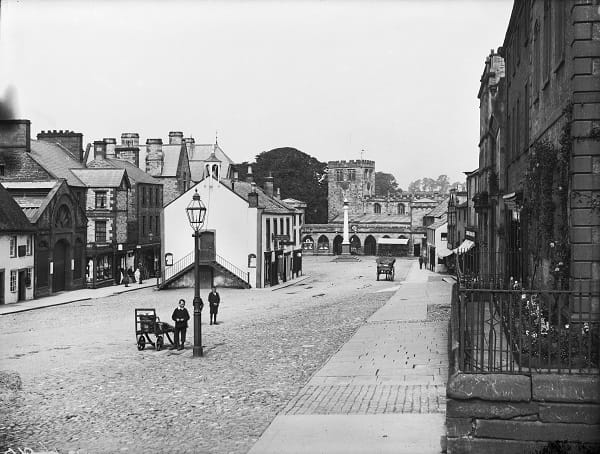
We are helping to restore and revive Appleby as a tourist destination following damaging winter floods two years ago. People’s homes and businesses – many in historic buildings – suffered significant damage. We’re providing grant aid for building repairs, boosting tourism to showcase the market town’s rich past, and using our expertise to deliver a five-year programme in partnership with Eden District Council. Appleby is one of the country’s first ten Heritage Action Zones, announced earlier this year by Historic England.
PROGRESS: Hooton Hangars, Cheshire
Significant progress has been made to restore these three Grade II* WWI aircraft hangars which were built in 1917 and used for aviation purposes until after World War II. They survived the closure of the airfield in 1957 after the disbandment of the Royal Auxiliary Air Force. Historic England has grant-aided major roof repairs to two of the hangers and continues to work with The Hooton Park Trust to ensure that the hangars are preserved for future generations to enjoy. The site, which recently celebrated its 100 year anniversary, is open for visits from the public.
PROGRESS: Blackpool Winter Gardens, Lancashire
Dating back to 1875-8, the Grade II* listed Winter Gardens have been on the Register for many years. The complex, which includes the Pavilion Theatre, Opera House, Floral Hall and Spanish Hall, sits in the very heart of Blackpool and is a testimony to the town’s rich history and contributes greatly to our nation’s culture. Eager to see it saved for future generations, we have given a £500,000 grant towards the £1.2m repair of the roof of the Spanish Hall. The works are expected to be completed next year.
PROGRESS: Heaton Hall, Manchester
The Grade I listed Heaton Hall, designed by architect James Wyatt in 1772 for Sir Thomas Egerton, has been on the Register for several years due to its deteriorating condition and a fire in the 1980s. To help bring the hall back to its former glory, we have provided £757,000 of match funding to its owners, Manchester City Council, covering three phases of essential repairs. We’re supporting the Council in bringing this stunning building back into use for local people and visitors to enjoy. The restoration is nearing completion.
PROGRESS: Former Baptist Chapel, Chorlton-On-Medlock, Manchester
This Grade II* former Welsh Baptist Chapel and Sunday School was designed by Charles Barry. The building has undergone something of a transformation. It was facing an uncertain future but will have a new lease of life as student accommodation in a booming Northern city. Repairs are in progress and the project is due for completion in autumn 2017.
PROGRESS: Wythenshawe Hall, Manchester
Wythenshawe Hall was added to the Register last year after being ravaged by fire. The timber framed Tudor hall at the centre of the site, which was built in the 1530s, was devastated and much of the earliest historic fabric destroyed. A man has been charged and sentenced to prison for the crime. We continue to work with Manchester City Council to conserve what remains and identify a new future for this much loved centre piece of Wythenshawe Park.
SITES REMOVED
REMOVED: Birkrigg Stone Circle, near Ulverston, Cumbria
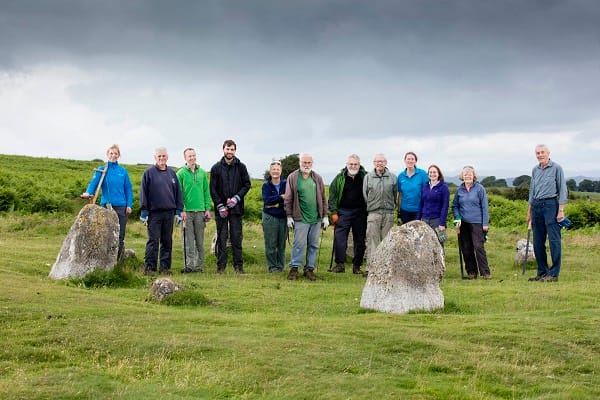
Thanks to local volunteers, the pre-historic remains at Birkrigg Stone Circle, which had been on the Register since 2014, are safe once more. Bracken infestation had caused damage and was concealing this remarkable monument from view. We’ve worked closely with the Morecambe Bay Partnership, through its Headland to Headspace Project, to protect these archaeological remains which date back to between 1700 and 1400 BC.
REMOVED: Ashnott Lead Mine and Lime Kiln Newton, Lancashire
Ashnott Lead Mine and Lime Kiln, in the Forest of Bowland, had been on the Register since 2009. Lead was mined here from medieval times until the 1830s. A limekiln crushed limestone burned to produce quicklime for fertiliser, limewash and mortar. But erosion from cattle hooves was damaging the mining remains, and the limekiln losing stability due to damaging vegetation growth and battering winds. We extended the scheduled monument boundary to protect the whole site and an agreement was worked up with Natural England, funding a fence to exclude cattle. Repairs were also made to the limekiln.
REMOVED: Aspen Coke Ovens, Oswaltwhistle, Lancashire
Coal mining began at Aspen in the early 19th century, continuing for a 100 years. The ovens burned off impurities in coal to produce higher value, higher quality coke. The colliery, ovens and canal basin became a scheduled monument in 1977. The disused colliery became something of a romantic ruin – ovens in banks of earth became known as the Fairy Caves and generations of children played where their ancestors once worked. But over time, vegetation and tree roots began to destabilise brickwork and the colliery was added to the Register in 1998. And so Hyndburn Council, Growth Lancashire and Historic England formed a partnership to tackle the site. We funded a condition survey and helped to fund repairs alongside WREN’s FCC Heritage Action Fund. Damaging vegetation was removed and brickwork consolidated. Growth Lancashire now plans to work with the community to find out more about the site so that its history can be shared with visitors and passers-by.
REMOVED: St Luke’s ‘Bombed Out’ Church, Liverpool
This early 19th century Gothic church was burned out in the Second World War and had been on the Register since its inception in 1999. We have worked with Liverpool City Council to bring the Grade II* listed building back into use, contributing £250,000 towards the repair costs. The refurbished church will now be home to an arts and events space. Run by a community company, it will support vulnerable people and provide volunteering opportunities.
REMOVED: Ashton Old Baths, Tameside, Manchester and Ashton Town Centre Conservation Area
These Grade II* listed former municipal swimming baths were built in 1870-1, and were on the Register for more than 15 years. A £4m project has seen the baths transformed into a business hub by the Manchester based property developer, PlaceFirst, working with Tameside Council. The project was supported by £1m in grants from the European Regional Development Fund and £1,712,000 from the Heritage Lottery Fund (England’s first completed Heritage Enterprise project). The building now houses a contemporary office pod which appears to float on space formerly occupied by the main swimming pool. Alongside this award winning conversion, improvements have been made to the surrounding area and public realm, and as a result the Ashton Town Centre Conservation Area is no longer considered to be ‘at risk’ and has been removed from the Register after eight years.