The RSPB is calling on the Government to honour its commitment to end the damaging practice of setting fire to England’s upland peat bogs, especially on grouse moors.
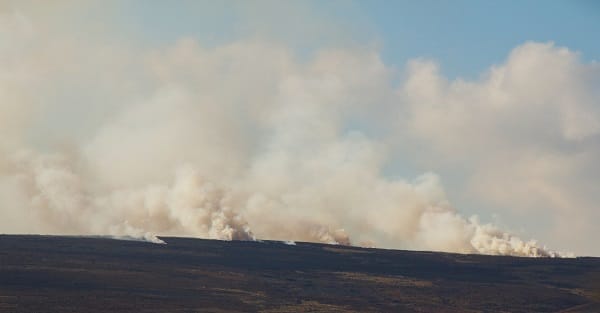
This Monday (1 October) marks the start of the new burning season, which permits land managers to set fire to areas of moorland in Cumbria (a practice known as rotational burning), including peat bogs, to encourage new heather growth and provide favourable conditions for red grouse.
Cumbria’s upland peat bogs (especially blanket bog) provide a valuable array of public benefits including providing a home for wildlife, countering climate change by locking up carbon, reducing flood risk, purifying drinking water and slowing the spread of wildfire.
However, the majority of upland peat bogs are in a poor state, with only an estimated 4% of them in England in a healthy condition (note 2). They have been affected by a range of damaging activities for many years including burning.
Following pressure from the European Commission to end burning on blanket bogs, Natural England – the agency entrusted with protecting the countryside in England– is attempting to negotiate the end of rotational burning on blanket bog across over 100 grouse moors (note 3). While some shooting estates have already agreed to stop rotational burning on bogs, a number of these have then been given permission by Natural England to continue to use fire to remove heather as part of a wider programme of work to supposedly restore damaged peat bogs. This so called ‘restoration burning’ is a misnomer: Natural England’s own evidence shows that burning actually damages peat bogs by drying them out, thereby robbing the public of their numerous benefits (note 4). Bogs need water not fire.
Healthy peat bogs with peat-forming sphagnum mosses help counter climate change by removing carbon from the atmosphere and locking it up in the peat. But when we damage peat that carbon is released which exacerbates climate change. In England alone, it is estimated that damaged upland peat bogs release the same amount of CO2 into the atmosphere as 140,000 cars annually (note 5). Three quarters of this is a direct result of burning the vegetation on peatlands (note 6).
Water quality is affected by peat bog condition. Healthy bogs produce clear water but damaged peat bog causes the water that runs off it to turn brown. This is a serious problem as around 70% of the water that comes out of the tap in Britain comes from the uplands (note 7). As a result, water companies have to spend a lot of money each year removing this peat colour to clean the drinking water for people’s homes. This cost is passed on to consumers through water bills.
Burning on peat bogs also reduces the variety of plants, and the wildlife that depends on them: benefiting just a handful of fire-tolerant species. In England, burning has changed many peat bogs, replacing their rich mix of bog plants and pools with a monoculture of heather.
Pat Thompson, RSPB Senior Land Use Policy Officer, said: “It’s a quarter of a century since stubble burning on fields was banned in the UK over environmental and safety concerns. Now it’s time for burning on our precious upland peat bogs to be similarly consigned to history.
“As the burning season gets underway, we will, along with others, be watching to see if Government commitments to stop rotational burning actually result in less burning. Our peat bogs are too important for both people and wildlife for us to sit back and let them be damaged any further.”