In one of my more flippant moments, brought about by the being ignored by the servants, I might suggest the best place to bury nuclear waste is in a large pit constructed as part of the refurbishment of Parliament. Hot ground below the hot air of the debating chambers!
But when pragmatism returns, usually with a scattering of Dreamies, there is a realisation that if this area is to have a long lasting benefit from the nuclear industry, then we have to grasp the nettle and embrace the opportunities a Geological Disposal Facility (GDF) might bring.
While it is easy to understand the objections to any nuclear activity, that does suggest hiding behind the sofa while the nuclear waste already sitting in the corner of the room is happily smouldering away.
We cannot revisit the decisions of the past when, in the post-war era, Royal Ordnance Sellafield was chosen as the site for the production of materials for the UK’s independent nuclear deterrent and renamed Windscale.
We can’t revisit the logicality of using the site for the first UK Magnox reactors producing electricity for the nation which added a further name, Calder Hall, which must have confused the local postie.
Having the waste products from both the nuclear arsenal and civilian reactors on site, it was inevitable that the waste would remain there despite, 60 years ago, little being known about how to manage it.
What we have now, with our nuclear warheads coming from the USA and Calder Hall being decommissioned and deconstructed, is one of the largest nuclear waste facilities in the world and let us not forget, some of the most skilled nuclear workers anywhere.
As part of that developing nuclear expertise is the new found knowledge that we can’t simply sit around with very toxic nuclear waste sitting in large ponds hoping that the concrete used to construct them won’t, ultimately, fail. No, we have to do something to ensure that we do much more to protect this waste.
That answer is to find somewhere geologically stable enough to bury it – a GDF.
The trouble is, how do you sell it to those people who live in close proximity to any proposed site? The answer to that is, of course, money.
If West Cumbria is to host such a facility, then we must not only expect but demand that the infrastructure of the area is significantly improved. Better roads with the dualling of the A66/A595. Better public transport, not a 156 Sprinter built nearly 40 years ago, on the Cumbrian Coast Railway, and a frequent and reliable bus service for those areas no longer blessed with a railway.
Then we need a commitment to upgrading the health facilities in the county to give our hard working and committed health workers the tools to do the job they so dearly want to do.
We need, also, significant investment in Workington and Barrow port facilities to provide them with the opportunities beyond nuclear – coal from Whitehaven? And with the latter, a redoubling of the commitment to submarine and shipbuilding to build on their clear expertise in a niche marine facility.
And to thread all this together, we need an investment in the social fabric of the area to make both current residents and those we hope to attract in the future, a real sense of community around which we can gather and be proud.
We all know Cumbria is a fantastic place to live and visit so we must work collaboratively – communities, council, Government and the nuclear industry, to ensure that all development is sympathetic to this outstanding area.
To do this, we need no obfuscation from the outgoing Cumbria County Council and a Cumberland Council hitting the ground running to ensure that whatever Government we may have in power next April, they are ready and able to stand up in Whitehall and demand, not ask, for all of the above and more.
And, finally, if we are to be the UK’s nuclear dustbin, let’s have a commitment to have a new nuclear generating facility at Moorside and give the local postie another headache with a change of name!
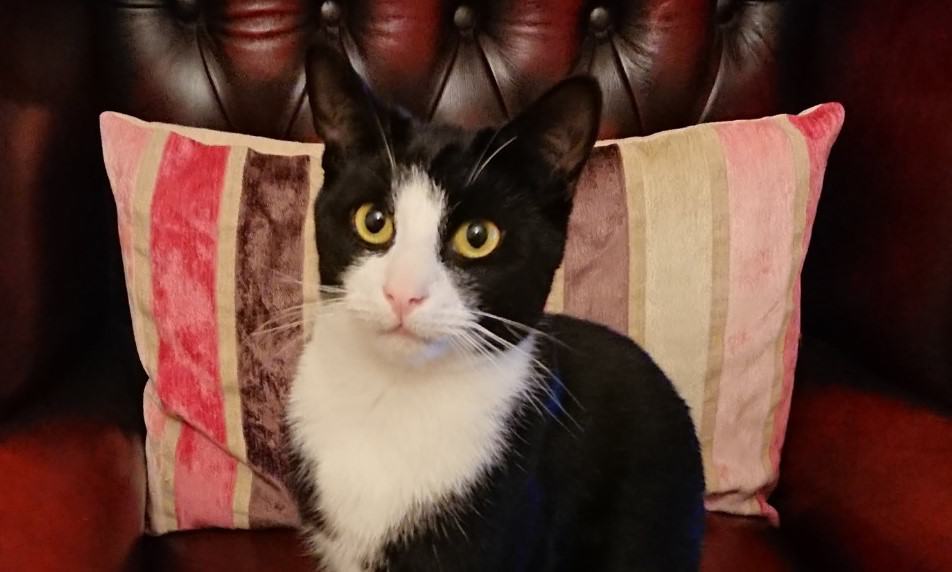
About Cumbria Cat
Born in Cumberland and, from 2023, will be back living in Cumberland, having spent most of the past 50 years in some place called Cumbria, this cat has used up all nine lives as well as a few others.
Always happy to curl up on a friendly lap, the preference is for a local lap and not a lap that wants to descend on the county to change it into something it isn’t. After all, you might think Cumbria/Cumberland/Westmorland is a land forged by nature – the glaciers, the rivers, breaking down the volcanic rocks or the sedimentary layers – but, in reality, the Cumbria we know today was forged by generations of local people, farmers, miners, quarriers, and foresters.
This cat is a local moggy, not a Burmese, Ocicat or Persian, and although I have been around the block a few times, whenever I jump, I end up on my feet back in my home county. I am passionate about the area, its people, past, present and future, and those who come to admire what we hold dear, be it lakes and mountains, wild sea shores, vibrant communities or the history as rich and diverse as anywhere in the world.