It’s 9.30am on a Sunday in December. I’ve travelled for an hour and a half to be here, in a secret location in the Lake District, surrounded by fells and trees covered in frost.
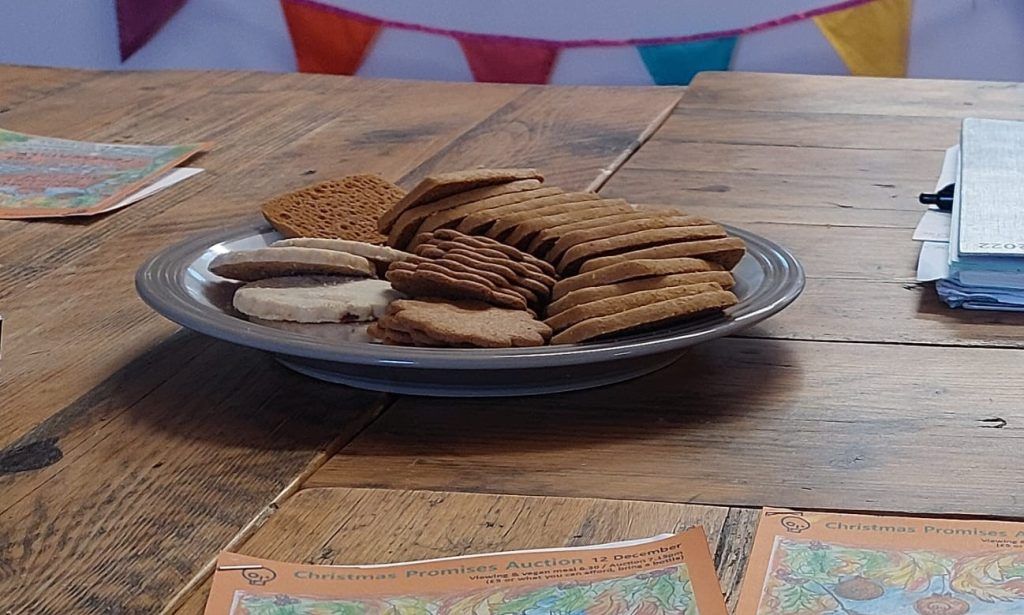
I’m sat at a table with three activists who have been arrested over five times between them and in front of us, are various plates of biscuits.
Two of them are women in their 50s – Kate and Polly, both from Cumbria, and then there is Tom, in his 30s, who has travelled several hours to be here.
He and Polly will spend the next eight hours training me in the ways of non-violent civil resistance.
The group has attracted widespread criticism from the general public, politicians and the right-wing press for their methods of protest which includes blocking motorways.
One of the most famous protests saw Just Stop Oil activists throw tomato soup at Van Gogh’s Sunflowers and glue themselves to the wall at the National Gallery in October.
As Kate tells me: “Blocking traffic and disrupting business as usual doesn’t make you popular with everyone.”
The names of the people in this story have been changed to protect their identities because activists are wary – some of them have been arrested for conspiracy.
The elephant in the room is the media, me, and all the other thousands of journalists tapping away at keyboards calling climate change activists dangerous eco-zealots hellbent on disrupting the peace.
The location of the meeting is given on a need-to-know basis and in the past, police have been known to park outside, as though they are waiting for trouble.
I’ve been told I am one of the first UK journalists to go through the training in its entirety.
I’ve met Kate and Polly previously, but Tom is new and he is sussing me out to see if I can be trusted.
Plainly, he says to me: “Do you actually give a shit? Or are you here for a headline?”
I tell him honestly that I’m here for the people, not the politics and that I want to learn the truth behind the dramatic headlines.
Turning to me over her weak tea, Kate says: “Well eco terrorists don’t tend to serve biscuits, do they?” She laughs.
Morning mental training and the meaning of non-violence
The day is supposed to start at 10am, but ends up beginning at 10.15am. Polly calls this running on activist time – a little inside joke, as they always end up starting anything they do at quarter past.
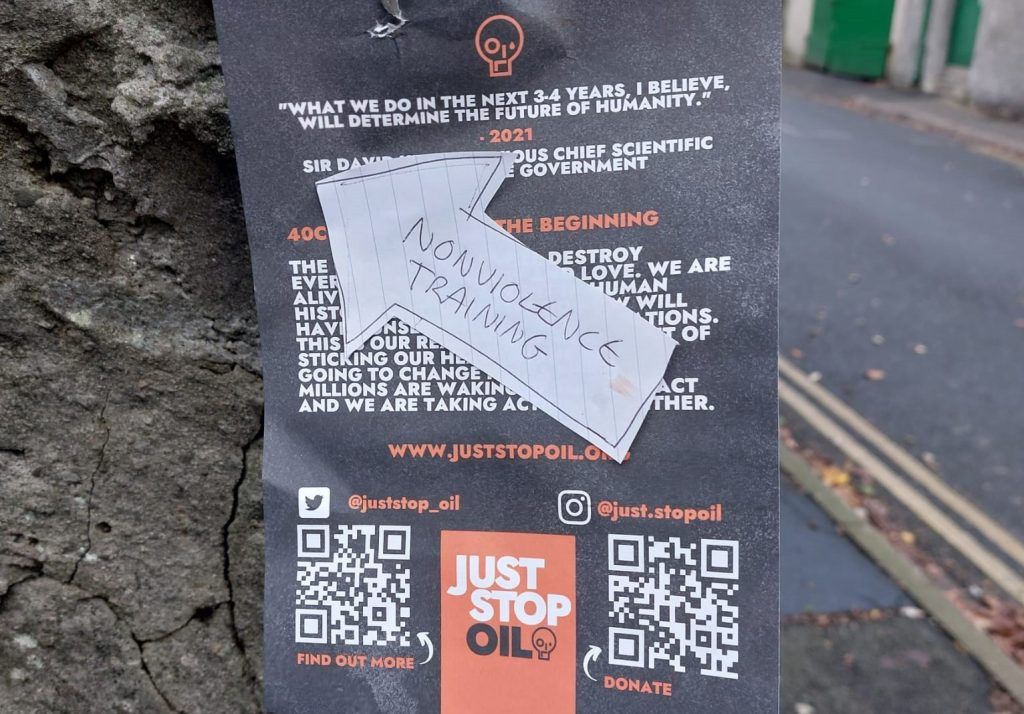
To get here, I’ve gone through the typical process of onboarding an activist. I started out by attending an initial talk in Carlisle, before I was invited to the training, but I’m told people often go to several talks before they get here.
It’s a tough listen, but it reinforces the fact that you can’t argue with science.
A mix of ages turn up, from 60-year-olds to 20-somethings. Tom tells me they once had a 14-year-old turn up and that anywhere from three to 30 people come to non-violence training days like this.
Just Stop Oil’s demands are simple and aimed squarely at the Government. They want no new gas and oil licencing and production.
The group is completely committed to non-violent civil disobedience to draw attention to the climate emergency.
Going into the room where we will spend the next eight hours training, I have no idea what to expect.
You can’t easily find this information on the internet and many of us may never know that activists often have to train to attend protests.
But the reality is far from that. Sitting in a circle, Tom tells us that activists often go through this training multiple times to mentally prepare for every action carried out across the UK.
To the rest of the group, I am a member of the public. Tom has told me to conceal my job as a journalist, explaining his priority is to safeguard everyone, including myself.
As we introduce ourselves, I notice the overarching reason drawing everyone together is fear. The people around me are scared for the future of humanity and they’re here because they don’t know what to do. It’s a lot to take in.
During the first half of the day, Tom teaches us mental resilience techniques and what it means to be non-violent.
Describing the training to me, he said: “It’s just one aspect of how we can prepare people to do this in their lives, we also do resilience training for when nothing happens after an action because we have to keep going and we are growing.
“It is a safe space for people learning if they want to take action and it is fully confidential. It’s not incitement, it is a first real step into activism.”
What strikes me is that some people around me are actively disagreeing and criticising the group’s methods directly to Tom, Polly and Kate.
They openly explain they find blocking the M25 morally wrong and that breaking petrol pump displays and waiting for the police to arrive is nothing more than property damage.
But the trio openly and gently discuss the concerns thrown at them, there is genuine care and worry in their eyes. This isn’t just a debate, it’s their day-to-day reality, and to them, business as usual is no longer an option.
The people who attend are allowed to come and go as they please, there’s no preaching here, only listening.
During this ‘theory based’ half of the day, we also talk about things the media regularly miss when reporting on actions.
The controversial dilemma of letting ambulances through in protests is raised. We are told the group has a blue light policy to let emergency vehicles pass through.
Anyone injured or experiencing a visible emergency is also immediately let through.
Research is also done to ensure petrol stations targeted are not franchised and to check that art cannot be damaged by soup or paint.
Talking about the impact of protests, he added: “I don’t want to do this stuff, I don’t want to affect people’s lives, but we’re left with no choice. This is not a nice thing and it is not a good thing.”
Disrupt or die – stepping into an activist’s shoes
Coming back after a lunch break, we are told the next part of the session will be intense and will allow us to learn if becoming an activist is for us through role play.
We begin with a visualisation exercise and we imagine ourselves as activists before our first protest.
We’re told to imagine walking into the middle of the road, the rush or the fear this might cause, the cold road beneath us, people screaming at us and beeping their car horns at us and what the concrete seats of a jail cell might feel like.
Opening our eyes, we are told to take a deep breath and this is the first of many.
I’m struck by just how much of an emotional impact being part of this training day has on you.
So often the humans behind the actions are lost, but here, they’re people, just like your sister, brother, mum or grandparents.
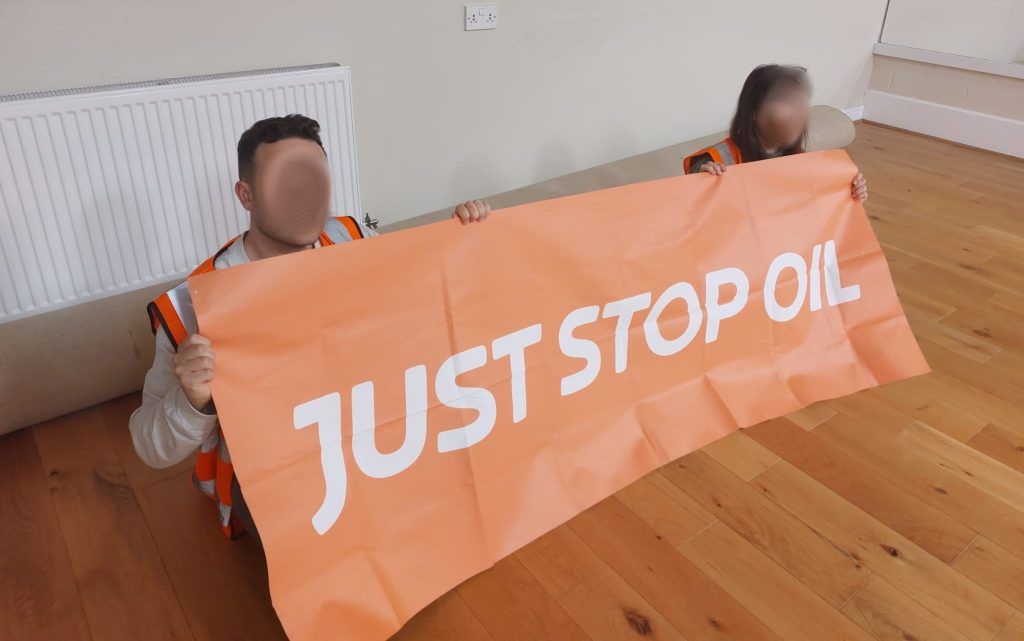
For the first time, we are given bright orange high visibility jackets to wear to help us get into character, I can’t help but wonder if the one I’m wearing was ever worn to a real action.
We start by talking about what the different people involved with a protest might be feeling while it is happening and comparing it with real life scenarios.
What strikes me during this discussion is the sheer mental strength of the people involved with these actions.
The record for sitting on top of a petrol tanker in protest is 38 hours, and I think about how cold and scared I would be to do something like that and how absolutely committed to a cause I would have to be to even consider it.
Tom adds that they have to wear very warm clothes, bring food, water and mini rucksacks and some even wear nappies or bring bottles to urinate in.
He said: “You have to consider the emotional and physical requirements needed to sit up there essentially with your own faults, that’s when the resilience training comes in.”
During the first two roleplays, we act as angry members of the public and ‘de-escalators’ whose role in a protest is to attempt to calm down the people being disrupted.
I realise that a protest is so much more than people think. Everything they do is finely tuned, from body language to speech. They remain non-violent in every way they possibly can and above all else, try to connect with the people they are affecting.
Emotions were running incredibly high in the room and after the exercises, Polly and Tom asks us to thank each other and calm down by remembering that the acting was rooted in love and concern and that it is all to prepare one another for the real front lines of a protest.
‘Look into my eyes and see I am human’
After a 15-minute comfort break for coffees and more biscuits we then sit down to watch a few videos of the worst experiences faced by protestors during actions.
We were shown activists physically dragged around by angry members of the public and some nearly run over by drivers out of rage.
It’s around this time things take a slightly sombre turn in the room as we begin to talk about how to protect ourselves if we are attacked or dragged around.
We also role play ways to non-violently refuse to co-operate and move. The aim of this game is to disrupt and the longer we can do that for, the better.
I have to be honest – it’s scary stuff – and I’ve been sworn to secrecy over exactly what went on, it’s somewhere in among one of the roleplays that I make eye contact with Kate, who I know has been arrested before and has done this kind of thing in real life.
I’ve spoken to her on the phone, laughed with her and we’ve chatted about our lives, and the thought of shouting at this woman, even as an act, feels too much for me.
Both Kate and Tom remain calm and stony faced, they know why they’re doing this. For them, it’s disrupt or die, the fate of all they love and care about is resting in their hands.
At one point, I’m curled up in a ball, sat with my arms wrapped around my knees in a bright orange jacket and all I can think is if this is scary for me, how the hell do people feel out in the midst of a sit down protest?
It’s one thing to be sat in a warm open space with a nice warm floor doing this, with no immediate serious threat of being punched or attacked or arrested, but thinking about doing this at 4am, on cold, wet ground with real danger surrounding you, must take guts.
You have to know that what you are doing is absolutely a last resort in a very serious situation that has led you to putting yourself into the line of fire.
After we finish the roleplays, we have a final discussion to unwind and just like that, we all part ways. We say our goodbyes and return to our day-to-day lives.
I’m told at this point, those interested in taking action post training day are given ways to get in touch and find out about upcoming action.
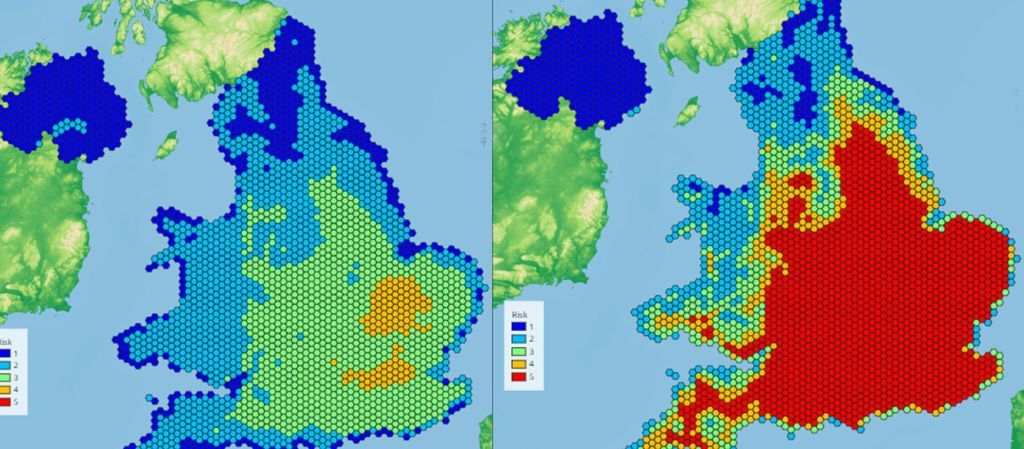
Coming away in the cold night air, I find myself thinking that there’s no denying the climate crisis it’s real, it’s happening and it’s here to stay.
But at the heart of it all is the futures of our friends, families and loved ones, and while you might not agree with the protests, or find them irritating or wrong – If a scientist told you we were facing imminent societal collapse, what would you do to save the world?