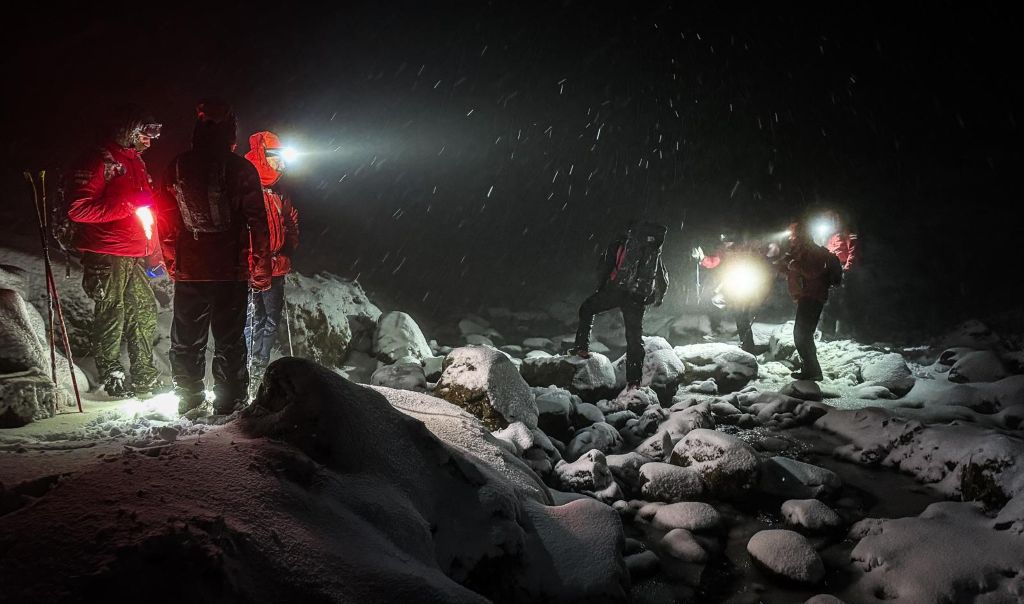
It might be cold outside – but that doesn’t stop people from taking to the Lake District’s fells.
In fact, snow dusted peaks and crisp wintery days are just as exciting as the warm sunny days for many people.
But the colder months come with their own risks, including whiteout conditions, avalanches, blizzards and wind speeds high enough to knock any walker over.
While it might seem like a time of year that should be quiet for mountain rescue, teams still face regular call outs in the winter months.
Even the most experienced walkers can suddenly get into difficulty in the cold, so is it ever really okay to go out in wintery or poor conditions?
We spoke with Nick Owen MBE, 62, of Kendal, who has been part of the Lake District Search and Mountain Rescue Association for 35 years.
He’s been both a team member for the Kendal and Langdale Ambleside teams and has served as a team leader and now acts as joint operations lead for teams across Cumbria.
We quizzed Nick on the ins and outs of what makes winter fell walking in the Lake District so different to summer.
Winter walking is harder
Hiking in the fells in the colder months comes with its own unique problems.
Walkers have to grapple with less daylight, colder temperatures, harsher weather and tricky under foot conditions that can change what might already be a challenging walk, into a much more demanding one.
Nick said: “It can be physically and mentally more challenging, everything involved with staying safe is ramped up in a sense, it requires more skill, concentration and another level up of equipment and backup equipment resilience.
“Even adjusting clothing or using a map or phone can be difficult when wind and snow is blowing and you’re cold.
“Really competent people, they’ll do things like put a layer on, but they won’t unzip their jacket fully so it doesn’t accidentally blow away.
“They’ll also have their gloves on cords and waterproof map cases. It’s a level of competency that is awesome to watch.
“I know I’ve been in bad conditions in the past where I’ve had to operate my phone with my nose so I didn’t have to take my gloves off.
“It’s years of practice and experience, but we’ve all got to start somewhere.”
While the risks are great, with proper preparation and skills, Nick said the rewards can be equally great.
He added: “I would certainly never say don’t go, because if you get it right and have a good day, then you are going to have a really good time.
“But the trouble is, if you have a bad day and something goes wrong, then a bad day in the winter is so much worse than a bad day in the summer.”
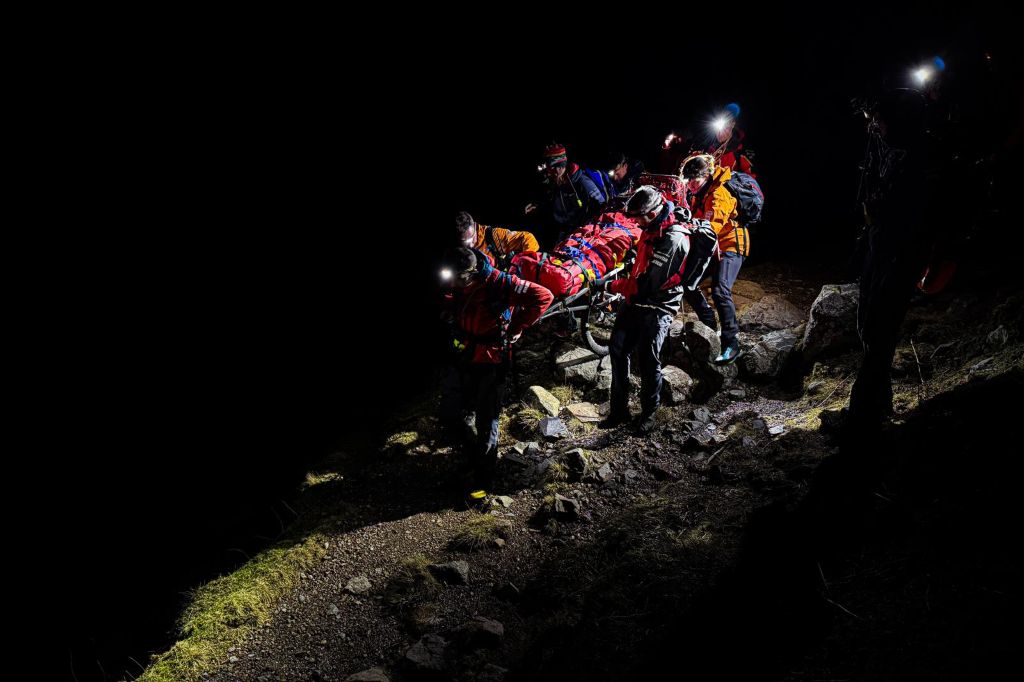
What a winter rescue looks like
Nick said that for both rescuers and people in difficulty, a winter rescue is a tough experience.
He added: “We’ve done hundreds over the years. Every winter, we deal with conditions where team members themselves need an ice axe, crampons and additional winter clothing.
“Crampon walking is a whole different level of coordination than just walking in boots, but teams do train for those conditions.
“Most teams do a trip to Scotland in the winter to get those guaranteed snow conditions and that experience getting out there.
“Lots of rescues will take place in the dark and when you’re in that, you’re focused on what you can see, which is in the range of your headtorch or the pool of light created by your colleagues.
“The danger is you lose wider situational awareness in those conditions, so we will have someone watching out for the team.”
Nick said that while rescues are often upsetting for the people involved, rescues in winter can be even harder.
He said: “From the telephone conversations I’ve had when we head out to rescue people, they are very cold, very scared and in some cases, they’re going to be like that for hours.
“Because in that period prior to us being aware, that person is stuck or injured and trying to get help.
“That is really really frightening for them. I have had conversations with people who are sobbing for help for you to come and you try to say its on its way, but because of where you are, it will take a while.
“Some of those people don’t think they’re going to survive and I can only imagine that it is a horrible experience.
“It’s also scary for family back home who the lost person has phoned for help or when family realise they’ve gone missing, they’re equally scared thinking they’re never going to see their loves one again
“We have to reassure them that we are on our way and that we will find them, bring them down and that they will be okay.”
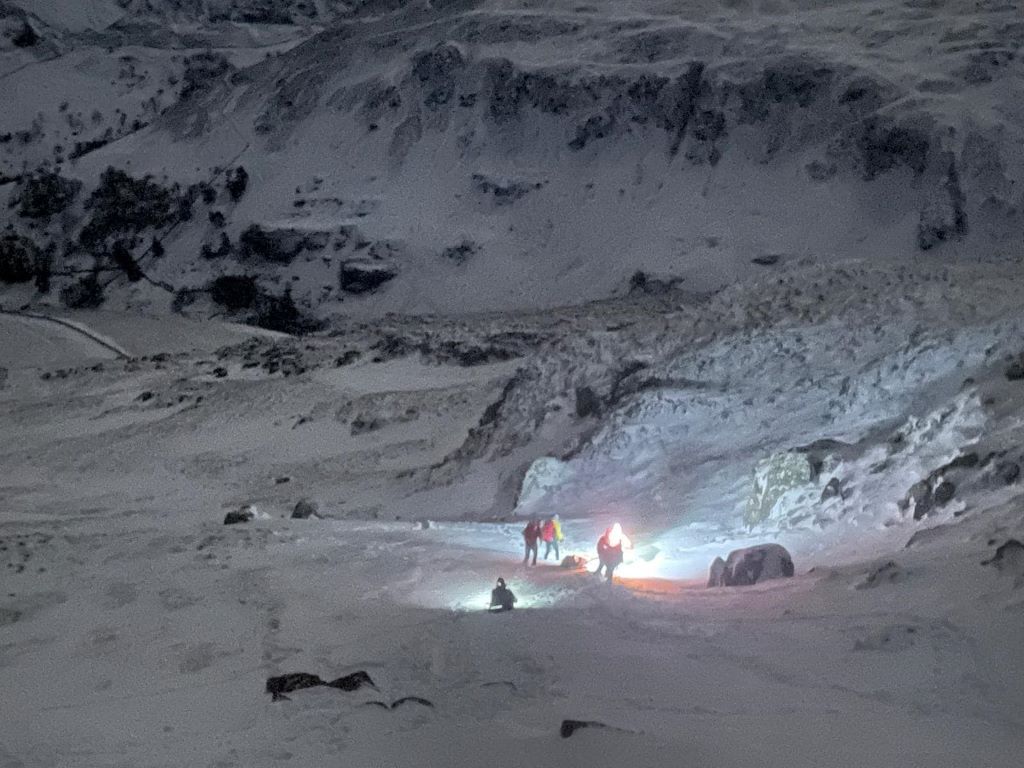
New mountain hazards in winter
Avalanches, blizzards and white out conditions might seem like things that only happen in the lofty heights of the Alps – but the Lake District does get its fair share of mountain hazards.
Nick said: “We do occasionally get avalanches, but what is more common in the Lakes is a full-depth avalanche.
“They are remarkably common on Hellvellyn and Striding Edge and we have had people avalanched over the years.
“Blizzards are relatively common and whiteout conditions aren’t just when snow is heavy and the sky is white, it’s when you can’t determine where the ground is anymore because everything is completely blurred out.”
A full-depth avalanche happens when the entire snow cover of part of a fell or mountain slides down on the ground or a smooth surface like grass.
Snow cornices can also form on fells and mountains, which is where snow goes over the rest of a hill, but has no support underneath.
Walkers should always steer clear of the edges of mountains and use a walking pole to test anything that looks risky.
Other risks include snow changing as temperatures rise and drop throughout a day on a mountain.
So while walking boots alone might be enough to get up in a morning, later in the day, the conditions could require winter hiking equipment like microspikes and crampons.
Nick added: “If there’s snow on the ground in the morning and you’re plodding up in knee deep snow, then come late afternoon, that snow can freeze as the temperature drops.
“So you’re coming back down on hard ice and microspikes are probably only good on 25 to 30 degree slopes, anything more they’re not secure enough, so danger of your boots rolling out of them, and at that point you’ll need a different route or crampons.
“But walking on deep, fresh snow is physically very demanding, especially when paths are obscured and navigation is difficult.
“Walking on rock hard snow that has turned to ice, which is known as névé, can be very slippy and does require microspikes or crampons and if you do take a slide, you need an ice axe and practice to know how to stop yourself from sliding.
“So as soon as you’re onto snow and icy ground, you’re on a whole different level of experience and not having some means of grip makes for a very different situation.”
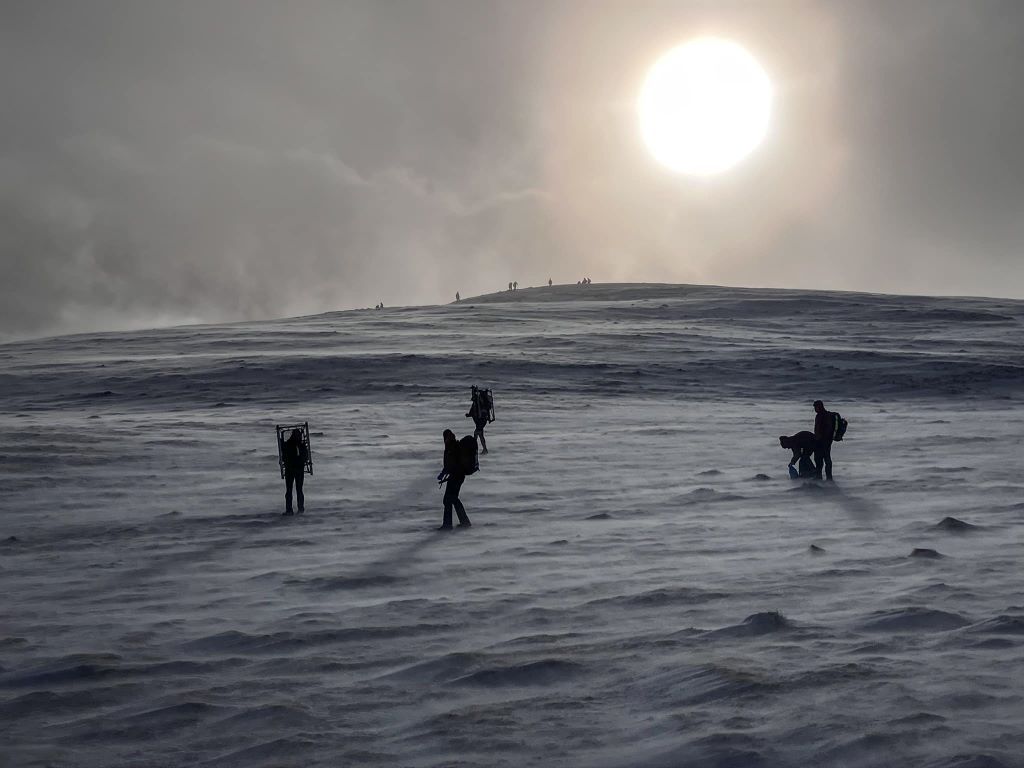
An element of survival
Walking in winter conditions and facing off with the elements comes with a different level of risk than it does in the summer months.
It’s also a risk that mountain rescue teams must manage.
Nick added: “The chances of things going wrong and the other things to consider like hypothermia and darkness are all ramped up in winter and if something does go wrong, the mountain rescue teams have to deal with those conditions as well.
“We’re all volunteers and there willingly but we are at times taking risks over our own safety to recover someone else.
“We do a lot of preparation for those likelihoods, but it does increase the risk for rescuers, and it is something to consider, but it is also one that mountain rescue teams are happy to accept.”
Nick added that teams still get regular call outs in winter.
Last year, two walkers were rescued after they got lost in deep snow on Skiddaw and in 2023, a couple were rescued from the top of a Dow Crag in the midst of snow weather warnings issued by the Met Office.
Nick said said that around 50 per cent of call outs are down to a walker getting up a mountain, but then finding themselves unable to get back down.
He added that the figures are significantly skewed by Wasdale Mountain Rescue Team’s statistics, as a major portion of incidents happen on Scafell Pike, right in the heart of where the team operates.
He said: “Breaking that down further, it’s people grinding to a halt because they’re navigating by map on a phone, they also might be using their phone torch to see their way.
“They’re low on skill and experience and probably just in general mountain craft, and they’re coming to a stop in poor visibility or in the dark.
“In winter, it’s dark for more than half of the day, so you’ve really only got an eight hour window in the depths of winter.
“So if you move slowly, starting at dawn, that’s not enough time to get up and back down a mountain.”
Going out in storms and poor weather
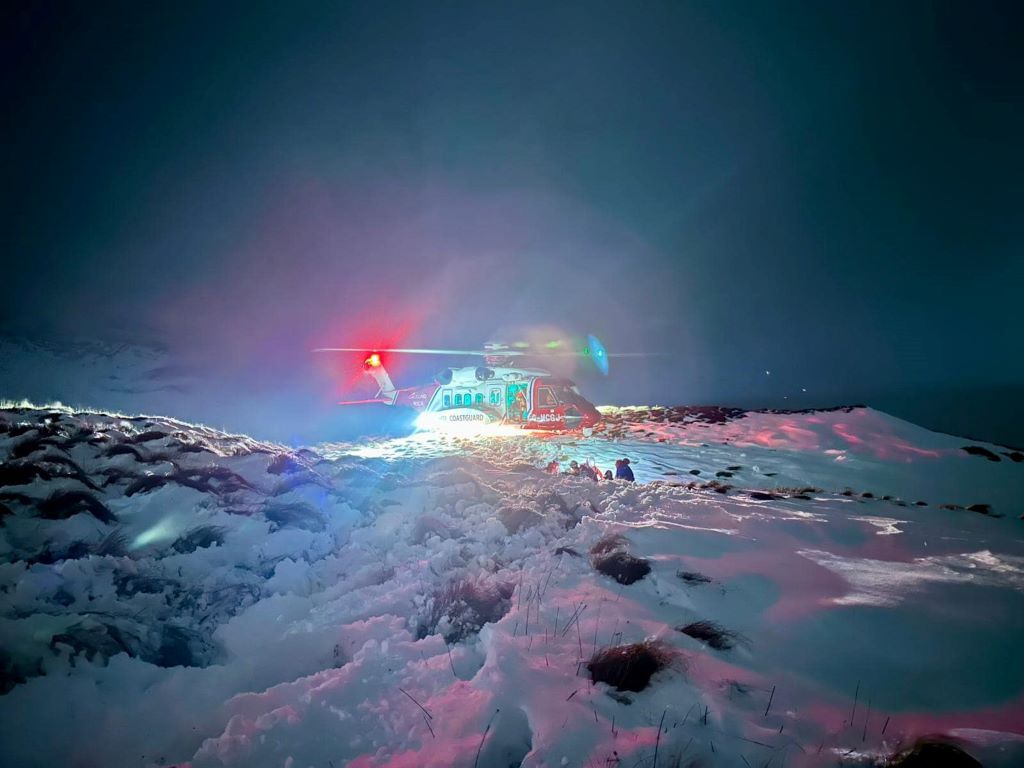
At the time, Patterdale Mountain Rescue Team said it had pushed rescuers to the limit of what they felt they could operate at before putting its team members at real risk.
While at the bottom of a fell, rain and wind might seem mild, at the top, it can be a very different story.
Nick said: “There was a few people who went out in the storms to exposed high up places, arguably ill advised.
“But it’s not the position of mountain rescue to say they shouldn’t have done it. But when people do, they need to consider the extra precautions and the risks.
“The weather forecast should be a major part of your planning decisions. Part of the problem is I don’t think people realise how much the weather can affect your day.
“30mph wind in a car might be no drama, but if you’re standing on the roof of that car, it’s a different matter.
“People don’t appreciate that 30mph wind is actually wind you would struggle to make reasonable progress in and at the same time, that wind can suck heat out of your body and if you’re in wet clothes and you then have an accident, you can end up in trouble really quickly.
“Virtually everyone we rescue in the winter has a reduced body temperature to some extent, with the best will in the world, they will be cold and getting colder.”
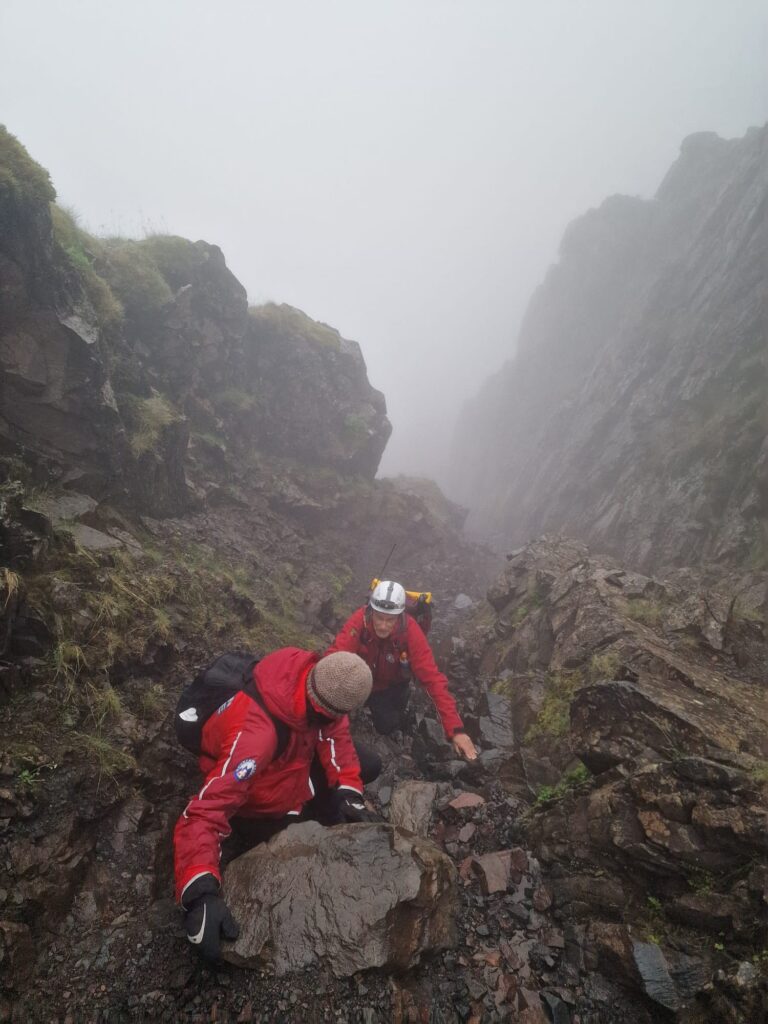
While the Lake District’s mountain rescue teams always make it out to people in distress, there are conditions that can slow them down or halt their progress.
Nick said: “The mantra is self, team, casualty. So when we go out, we first look after ourselves so we dont have an accident and add to problem, then its your team mates and then the casualty is next.
“There are conditions where we’ve really struggled to get to somebody because of wind, and we’ve had to reconsider our route to find a more sheltered path.
“If there is a lighting storm, they do pass quickly, but there are occasions where we look at trackers and we have to delay by a quarter of an hour or so, it’s relatively rare, but does happen.
“If water levels are high, route finding also changes, we might not be able to go via the quickest route and we have to pick one that doesn’t involve crossing a river that is five metres wide, a metre deep and running at 20mph.
“I don’t think anything has ever stopped us going out completely, but we do have to consider wind, flooding and lightning.”
In very poor conditions, making a sensible, ability-informed decision is the advice of mountain rescue.
Nick added: “It’s why coffee shops and bookshops were invented and Ambleside and Keswick have so many!
“I do understand if people have paid money for accommodation, they’ve driven five hours or so to get here, that they want to do plan A.
“But is plan A is a bad idea, knock it on head, get a coffee and a cake and come back next week or next year. The mountains are still going to be there, they’ve been there for thousands of years now.”
Nick said it is also important to make an ability-informed choice when venturing out into the fells.
He said: “Find an activity appropriate for your ability and for conditions. I can’t tell Chris Bonington to not go up Scafell Pike in a blizzard, everything is relative.
“But if you have no experience, you have your lovely white trainers on and you’re struggling to get through car park puddles, there’s probably a better day out there.
“Save the adventure for a better day or better weather forecast, or go with friends or groups or guides who are experienced and know what they’re doing.
“We never want to say don’t go and do it, but we do want people to make their choices based on being well informed.”
Essential winter fell walking equipment
Nick said there are several essential items walkers must take out with them when they’re heading out in winter.
But some items like crampons, microspikes and ice axes, require walkers to have a good understanding of how to use them properly.
Nick said while winter skills courses do cost money, they are essential investments for those looking to head out on major winter adventures up in the mountains and fells.
Good thermal clothing made of things like merino wool is also advisable in the cold months.
Nick said winter walking essentials include:
- Walking boots, not trainers
- Waterporoof trousers
- Waterproof jacket
- Multiple warm layers
- Synthetic insulated jacket with a hood, not a down jacket, as they get wet and lose insulation
- A few pairs of gloves
- A few pairs of socks
- Waterproof map and compass and a knowledge of how to use them
- Headtorch and spare torches and batteries
- High calorie food for emergencies
- Plenty of food for the day, as you burn calories faster in tough conditions
- Drybag for all essentials
- Hot drink – optional, but sensible
- First aid kit and basic knowldege of how to use it
- Drybag for phone
- Good portable charger for phone
- A wooly hat
- Goggles or glasses for the wind and cold
- Microspikes and poles for icy and snowy days
- Crampons and ice axe for heavy snow conditions – but those using them should look into winter skills courses first or be knowledgeable of how to use them
- A good emergency shelter or bivvy bag
Nick added: “Bivvy bags in particular are great, you can eat your lunch in them to stay warm and in an emergency they can increase the temperature around you by up to 10 degrees, which can be the difference between life and death.
“There’s always someone new to get through to, and even if we get through to one person who rethinks their day out or decided to go on a winter course, that can make a big difference.”
People taking to the fells are asked by the Lake District’s mountain rescue teams to #BeAdventureSmart and ask themselves the following questions before setting off.
1. Do I have the right gear?
2. Do I know what the weather will be like?
3. Am I confident that I have the knowledge and skills for the day?
You can check mountain weather forecasts here and find out more about Adventure Smart here.
Matt Le Voi, of Lakeland Mountain Guides, who we spoke with last year about his experiences on Scafell Pike, offers winter skills courses alongside dozens of mountain guides across Cumbria.
You can donate to the Lake District’s Mountain Rescue teams here.
Want to learn about safely tackling Scafell Pike? Read here.