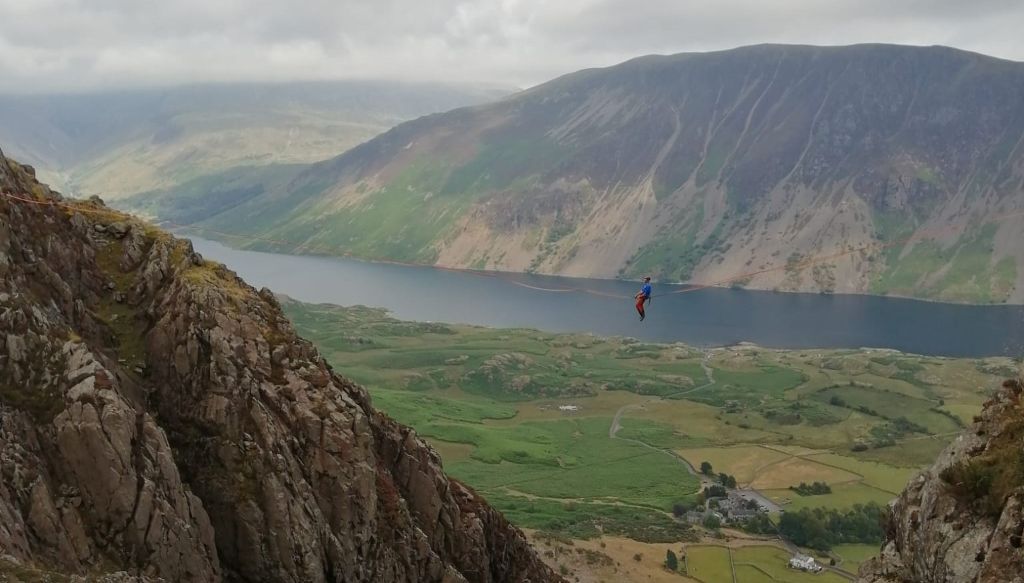
Dangling 60 metres above a Lake District valley might sound terrifying – but for some, it’s actually a day well spent.
Over the past few years Cumbria has slowly become home to a small community of slackliners, a sport that involves rigging up lines, known as webbing, at height and walking almost tightrope-style from point to point.
Cumbria’s slackliners spend their spare time balancing over lofty heights at Scafell Pike, St Bees Head and even over lakes and waterfalls in places like Eskdale.
For Matthew Warwick, 54, from Whitehaven, who has played a big role in establishing slacklining spots in the county while also helping to teach others, it’s a sport that he’s hugely passionate about.
He said: “I’m in my eighth year of slacklining and it started when I was going to a climbing wall, I wanted to climb but never had a partner to climb with and then I discovered the world of automatic belays and started climbing.
“Six months in, I got an arm injury, a classic schoolboy error of progressing too quickly. So that put me out of action quite quickly.
“But then I came across slacklining, and thought I’d get one and have a go in the garden while my arm and elbow healed and that progressed to parks and that was it, I was hooked.
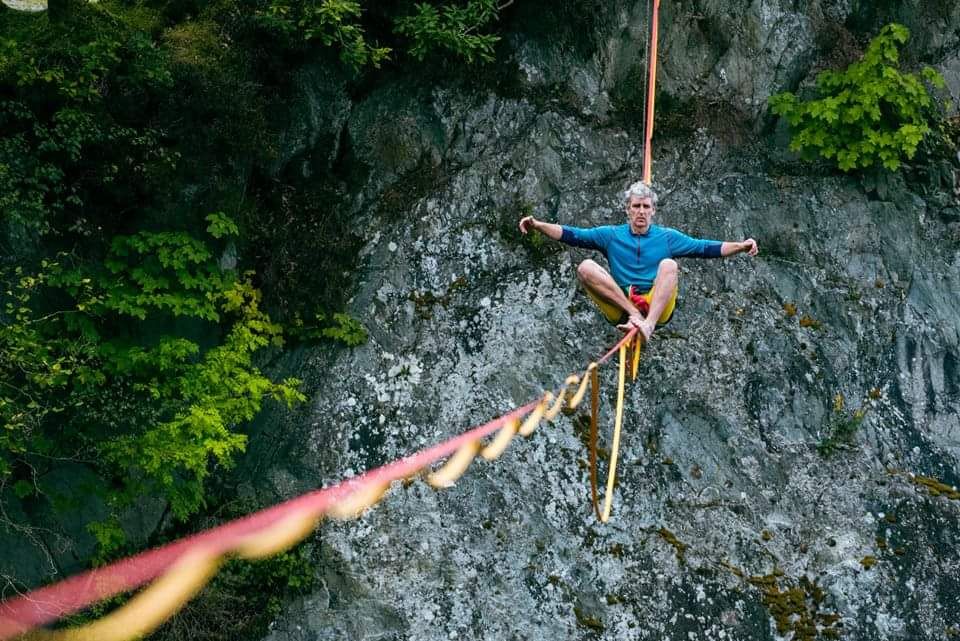
“About four months in I went to a highline meeting with the UK Slacklining group, and everyone was really helpful and friendly and I just thought how cool is this to be around a bunch of likeminded people.
“There was nothing but support regardless of ability, and that was it, I practiced and went to highline get togethers and it went from there.
“It’s gives you a huge sense of pride and achievement and when we go highlining that’s what we feel, it’s that sense of achievement.
“Every time you push yourself and have a go it feels like you’ve run the London marathon.”
Highlining is considered a sub-discipline of slacklining, and involves rigging lines up at great heights, often between cliffs or peaks on mountains.
Matthew’s first experience of highlining took place at Mallam Cove in Yorkshire.
He said: “Towards the end of the first day of the first highline meeting I went to, they said okay Matt, do you want to have a go? And I said woah, I’ve just come to watch!
“But they encouraged me to have go, get out there, have a dangle and just experience the exposure of the void.

“So they took me out there and I quickly realised it was a lot harder than you think! I’m actually 54-years-old and I was 46 when I started slacklining.
“I thought if I’m going to get any good, then I really need to commit and practice, so that’s where it started.
“It might seem to some people like a high level of torture! But for me I really enjoy it and it takes you to some amazing places.”
Matthew has since spent years practicing slacklining and learning to highline across the Lake District from the lofty heights of Scafell Pike to Hodge Close quarry.
While Slacklining UK forms the main group where Matthew coordinates meet ups with others in the community, he also created a sub-group, Slackline Cumbria, for local people to get together too.

He’s experienced heights of up to 80 metres and has walked on line distances of up to 195 metres and he added that it’s tough to choose just one favourite location in the county.
He said: “Everywhere we do it is mind blowing, we’ve done Scafell Pike at a place called Lord’s Rake and we’re the only people in the world to have rigged Piers Gill and we did a line at St Bees a few months ago, that was absolutely amazing and we’ve done Stanley Gill in Eskdale.
“Just standing there in that void on a calm day just with yourself is unreal. But some of these places are really quite special.
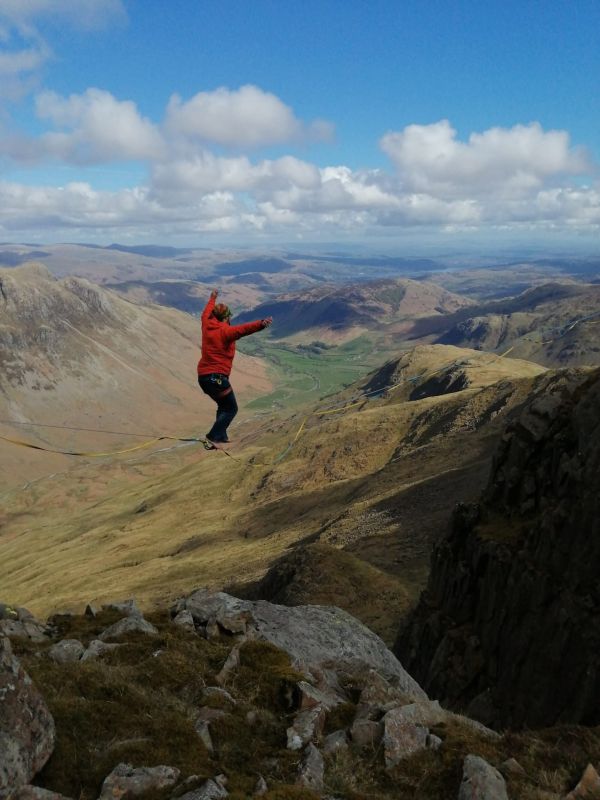
“I’ll spend all winter walking up the fells looking for areas to do it, I might walk up a mountain 10 times and I’ll take ropes and rocks and think how can I make an anchor work here.
“I take photos and tell people what I’m thinking and note what equipment we need and we’ll then plan a weekend and get around six people to carry all our stuff up.
“Last year, I was there when the UK Slackliners actually set the record for the longest highline in Great Britain, which was just over a kilometre long at Blea Water
“But all of these Lake District lines, apart from Scafell, I found them and got the teams and community together to come and help rig them up.”
Matthew said it’s a sport that often draws in the occasional curious spectator or two and that the community is always happy to educate people and help them understand what they’re doing.

He added that he’s also made some quite special and unusual memories while out highlining.
He said: “One time when we rigged a highline in Eskdale at Stanley Gill, one of the bridges had collapsed because of the storms and a family came up and they had wanted to scatter their great grandad’s ashes into the waterfall.
“They ended up coming to the top and saw us and they were amazed at what we were doing.
“So they told us the story of their grandad who used to do a bit of travelling and climbing and they asked us if we would scatter his ashes.
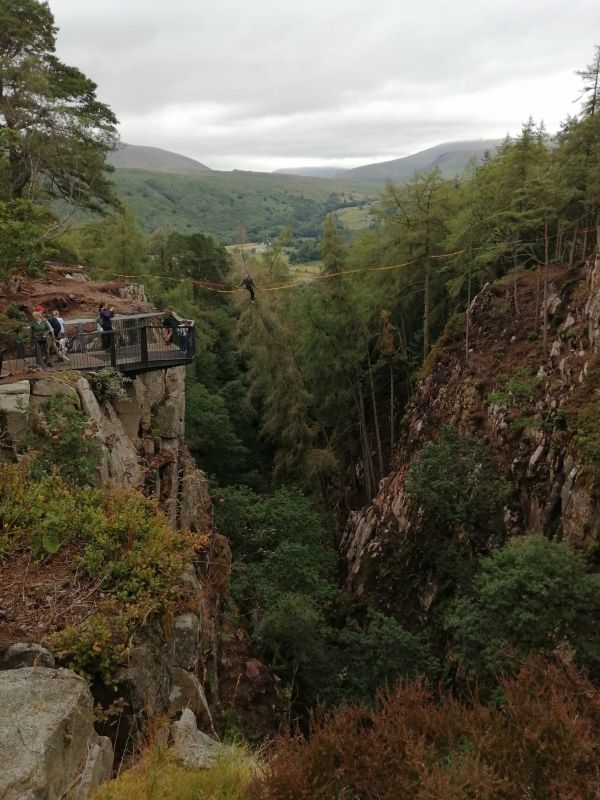
“Our little group were all sat around the cliff edge crying, it was really emotional and the family were absolutely delighted.
“One of the lads I was with said right, we can do this, so we got a little rope, we secured the urn in a little bag and he took it out and scattered his ashes.
“It was a truly amazing day, we hugged complete strangers and they went about their day and us ours.”
While it may look simple enough from a distance, slacklining is actually a very technical sport and just standing up on a line takes a lot of practice.
Matthew said: “I achieved becoming really good at the slacklining, but the actual highlining, it’s a love hate relationship, because you’re either absolutely timid and nervous, or you’re absolutely alright with it.
“So it’s been a work in progress for me and I’m still at it. It’s all about being able to compose yourself and maintain some form of calm where you can make yourself stand, take some steps and fall cleanly and be okay with that.
“The adrenaline hits you afterwards when you’re on the edge and you’ve achieved it and you’re like oh my god, that was amazing.”
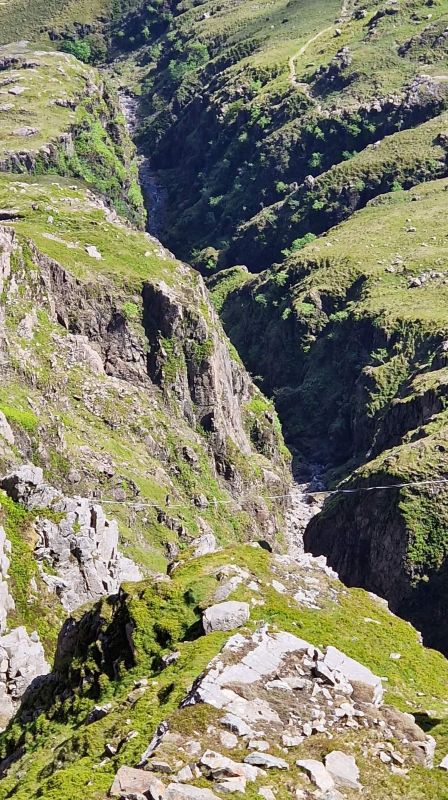
While to many of us slacklining might seem like an adrenaline junkie sport, Matthew said he believes that’s not the case.
He said: “In the actual moment, it’s the total opposite of what people might think. People think you’re an adrenaline junkie type, but it’s almost quite the opposite.
“You do get that moment of anxiety on the side of the highline, even the people who are quite good get that moment of nervousness, but they’re able to crack on with it and deal with it in their own way.
“But nervous is good because you do all your safety checks! But you do have to sit, be calm, do relaxing breathing, and you find that the anxieties and stresses and flush away.
“You then get into the focus of it, stand up and if you get a good walk in, that’s that
“Every process within it is physically knackering, but 80 per cent of it is technique and once you get that you go wow, that was so easy!”
While it may look dangerous – and while there are some elements of danger, just like climbing outdoors – Matthew said it’s a safe sport.
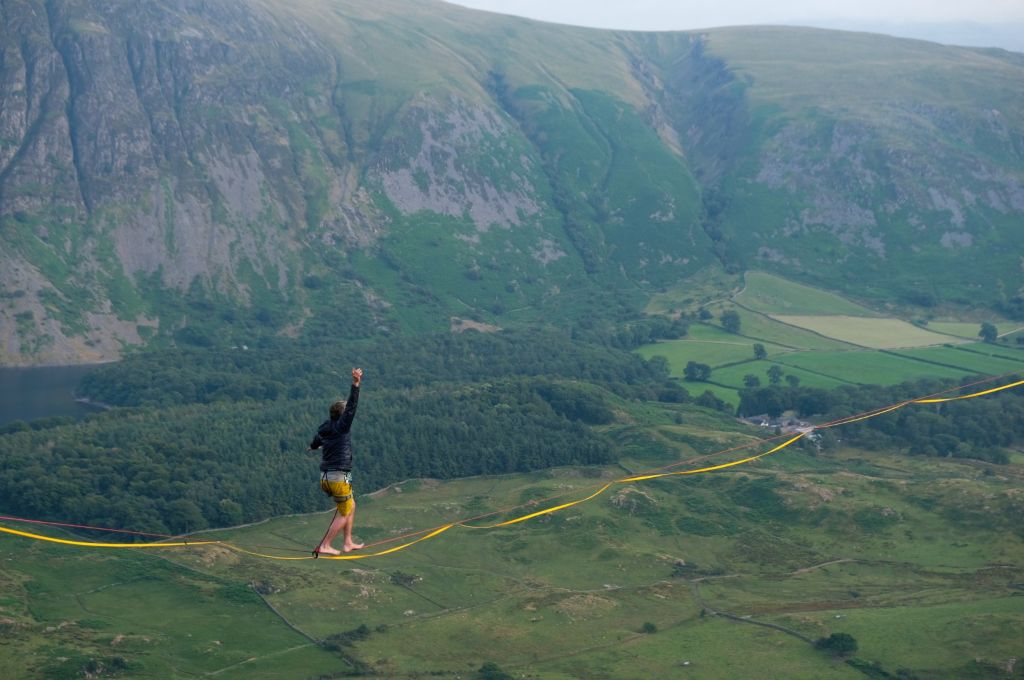
Slackliners use personal safety leashes to protect them when they fall and they rig a backup safety system line to protect them in the event of a main line failure.
He also said that the community does all it can to protect the areas they rig lines in.
Matthew added: “Doing something wrong, the result would be death, so all the equipment we have is highly rated and specified equipment for the sport.
“All our ropes have safety ratings and some places we actually do test runs to test the forces we put on the line and we’ll sit and watch it for a few hours to see what happens.
“We also rig all natural, so we try to use what is natural where possible and make do with what we’ve got.
“We’re always respectful with our equipment and everything we use, so if we use trees we use tree protection and we can put ground stakes in the ground use our anchor and then remove them.
“We’re very mindful as to where we go and what we do, and we try to go out of the way so we don’t bother people. But we do try to educate people if we see them that we’re not just a bunch of crazy idiots!”
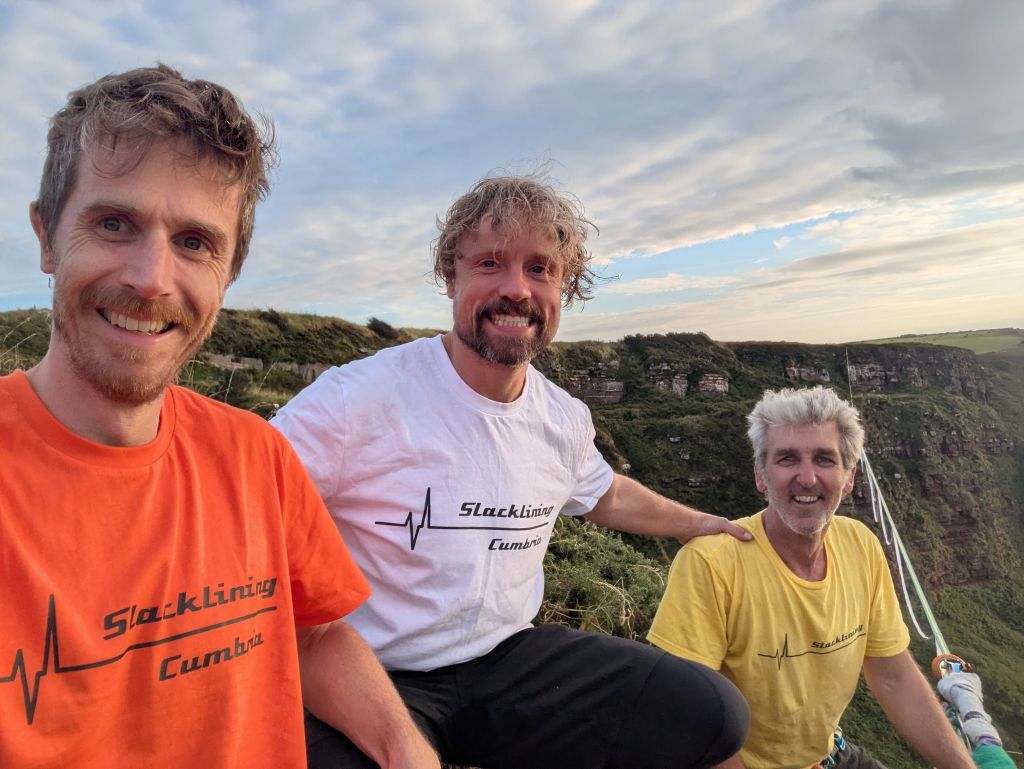
But Matthew said that overall, it’s a sport that means a lot to him.
He said: “Ultimately, it brings like any sport a purpose, hobby and focus, it’s a personal challenge and why do I do it? Because the only option is don’t.
“I think the difficulty of it is almost why you do it. The irony of it is that’s why I enjoy it, because for me, it’s been such a struggle to overcome the nervousness and fear to progress.
“The slacklining community is also a lot more chilled, that’s another reason why I enjoy it, there’s nothing but support for where you are within your journey.
“I think it’s an underdog sport, like skateboarding or roller skating, and it’s affordable and you don’t pay subscriptions.
“But like with anything you do in life, you have to make the effort and it doesn’t always come easy. It’s like a metaphor for life, we can try something and give in, but it takes a stronger person to keep trying.”