
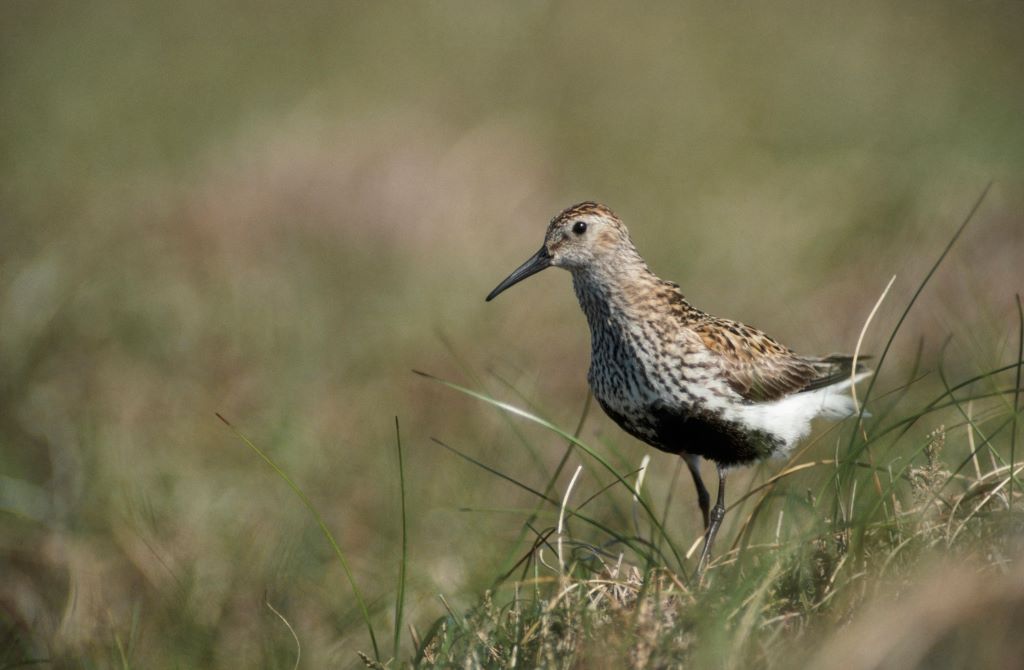
A rare wading bird is now breeding along large parts of Cumbria, a new survey by the RSPB has found.
Dunlins are starling-sized wading birds with striking breeding plumage. Found in the uplands, they have declined by around 20 per cent globally since the 2000s. In the UK they are Red Listed.
The survey, carried out by the RSPB’s conservation team last year, working with landowners and funded by Natural England, found Dunlins in the Cumbrian portion of the Pennines.
It was the first co-ordinated effort of its kind across such a wide upland landscape in Northern England, providing vital new evidence about where Dunlin are surviving and what they need to thrive.
Fourteen sites were surveyed across the Cumbrian North Pennines during the Dunlin breeding season from May to July 2025, with around 30 individuals recorded at eight of them.
The RSPB said the results show that the species remains present across significant areas of high-quality upland habitat.
The surveys, helped by committed volunteers, including from Cumbria Bird Club, focused on remote, wet upland landscapes of the North Pennines, including the High Helbeck Estate, where conservation work has been ongoing for several years including peat restoration work, led by the North Pennines National Landscape team.
Dunlin breeding in the North Pennines travel thousands of miles to winter in West Africa.
Until now, there has been no large-scale co-ordinated survey of Dunlin across this landscape, leaving major gaps in conservation knowledge.
Dr. Elisabeth Charman, senior conservation officer at the RSPB, said: “To find Dunlin breeding in new areas was extremely rewarding, and we hope our partnership efforts can contribute to their continued success in the Pennines.”
Nicolete Blackett-Ord, joint landowner High Helbeck, added: “It has been extremely rewarding to take part in this project.
“We’ve learnt such a lot about this threatened species’ distribution and habitat needs. To confirm breeding at High Helbeck is particularly special because we have worked with the RSPB and partners for several years, improving habitat, to enable wading birds to thrive.”